


 English
 中文简体
中文简体 русский
Termite Resistant Cable: How It Works, Key Types & Selection Guide
Termite Resistant Cable: How It Works, Key Types & Selection Guide
Termite Resistant Cable: How It Works, Key Types & Selection Guide
Termite Resistant Cable: How It Works, Key Types & Selection Guide
Termite Resistant Cable: How It Works, Key Types & Selection Guide
Termite Resistant Cable: How It Works, Key Types & Selection Guide
Termite Resistant Cable: How It Works, Key Types & Selection Guide
Termite Resistant Cable: How It Works, Key Types & Selection Guide
Termite Resistant Cable: How It Works, Key Types & Selection Guide
Termite Resistant Cable: How It Works, Key Types & Selection Guide
Termite Resistant Cable: How It Works, Key Types & Selection Guide
Termite Resistant Cable: How It Works, Key Types & Selection Guide
Termite Resistant Cable: How It Works, Key Types & Selection Guide
Termite Resistant Cable: How It Works, Key Types & Selection Guide
Termite Resistant Cable: How It Works, Key Types & Selection Guide
Termite Resistant Cable: How It Works, Key Types & Selection Guide

Industry News
Product Category
NEW Category
Contact us
 +86-0510-87296815
Termite Resistant Cable: How It Works, Key Types & Selection Guide
Content
Why Termite Damage to Cables Is a Serious Problem
Electrical cables buried underground or routed through soil-contact structures face a threat that most engineers don't think about until an outage forces them to. Termites do not eat plastic or polymer insulation for nutrition — their digestive systems cannot process it — but that biological fact offers no protection to cables in the field. Termites attack cables as obstacles during foraging runs, using their strong mandibles to break through any material that blocks their path to cellulose-rich food. The result is a sheath penetrated, conductors exposed, and a circuit that fails without warning.
The scale of the problem is substantial. In Australia alone, economic losses attributed to termite activity across all infrastructure categories run into billions of dollars annually, with cable failures contributing to outages in telecommunications, power distribution, and control systems — particularly in the warmer, wetter climate zones where subterranean termite colonies are most active. In tropical and subtropical regions across Southeast Asia, South Asia, and sub-Saharan Africa, the risk profile is comparable.
Standard flexible PVC sheathing — the same material that performs reliably in most above-ground and conduit-protected applications — is among the materials most vulnerable to termite mandibles. Termites find a purchase point at any surface irregularity, embossed marking, or cut end on a cable, and once an attack begins, the colony continues until either the cable fails or a physical barrier stops them. Understanding what makes a cable genuinely termite-resistant is essential for any project where cables are buried, embedded in concrete slabs, or run through soil-contact voids.
How Termite Resistant Cables Are Built
Termite resistance in a cable is not a coating or a treatment applied at the end of production — it is an engineering decision made at the material selection and construction design stage. Two distinct strategies have been developed and validated over decades of field testing in high-risk regions: physical barriers and material hardness.
Physical barrier approach — Steel wire armouring (SWA) or steel tape armouring (STA) has historically been the most reliable termite barrier available, because the mandibles of even the most aggressive termite species cannot penetrate competent steel layers. Galvanised steel wire armoured cables, widely used for direct burial, deliver termite resistance as a natural consequence of their mechanical protection design. The limitation is flexibility and weight: SWA cables are heavier and have minimum bending radii that complicate installation in congested ducts or around sharp bends.
Material hardness approach — Research conducted jointly by scientific bodies and the cable industry from the 1960s onwards identified that termite mandibles have a threshold hardness they cannot overcome. Nylon 12 (Polyamide 12, or PA12) emerged as the benchmark material, exhibiting a Shore D hardness above 65 and a smooth, glass-like surface finish that prevents mandibles from gaining a purchase point. High-density polyethylene (HDPE) with a Shore D hardness above 62 also shows strong resistance. Both materials have since been validated through multi-country field trials covering Australia, Thailand, Malaysia, Japan, and the United States.
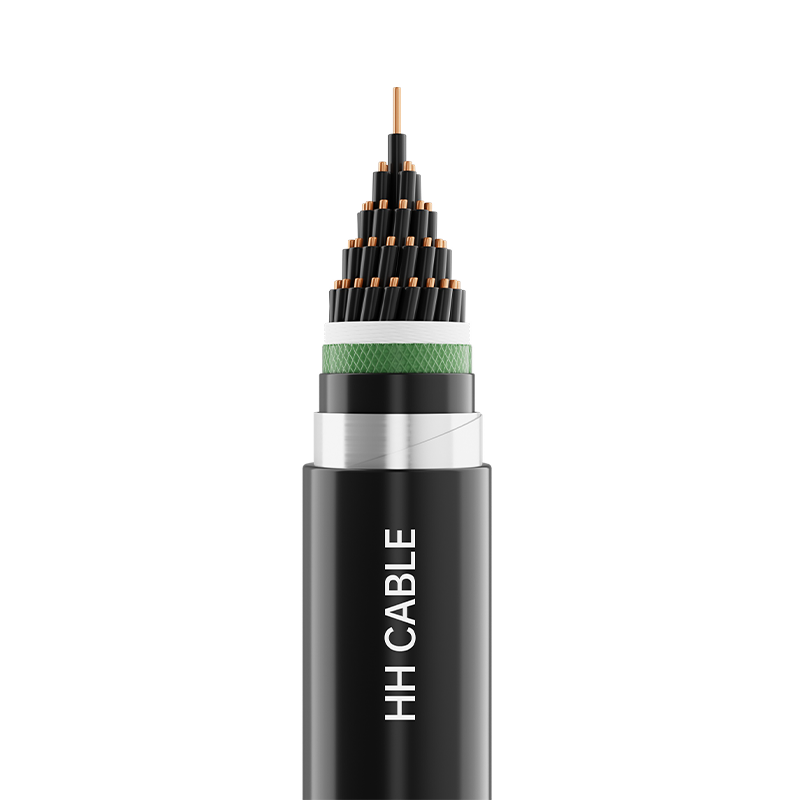
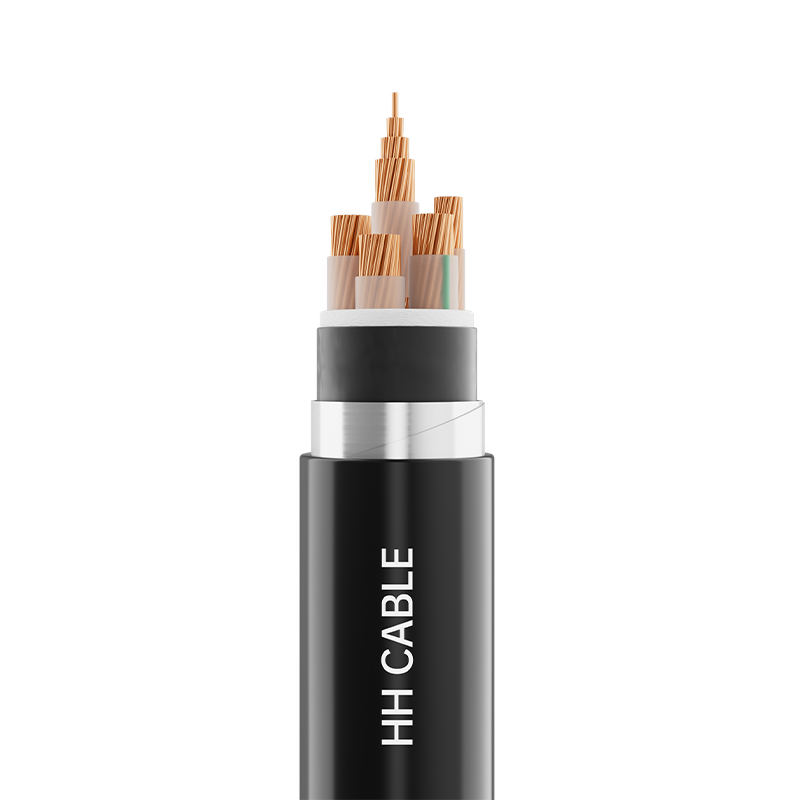
Modern termite resistant cables combine these approaches in a layered construction: a stranded copper or aluminium conductor, primary insulation in XLPE or PVC, an inner sheath, and then either a nylon outer sheath, an HDPE outer jacket, or steel armouring as the termite barrier. Some designs add a glass fibre braid beneath the outer jacket for additional mechanical reinforcement without the full weight penalty of steel wire armouring.
| Sheathing Material | Shore D Hardness | Termite Resistance Rating | Typical Use |
|---|---|---|---|
| Flexible PVC | 50–60 | Low | Indoor, conduit-protected |
| Rigid PVC (pipe grade) | 65–75 | Moderate | Conduit, duct lining |
| HDPE (high density) | >62 | Good | Direct burial, underground |
| Nylon 12 (PA12) | >65 (smooth finish) | Excellent | High-risk tropical/subtropical zones |
| Steel Wire Armouring (SWA) | N/A (metallic) | Excellent | Direct burial, mechanical protection |
Product Types and Standards
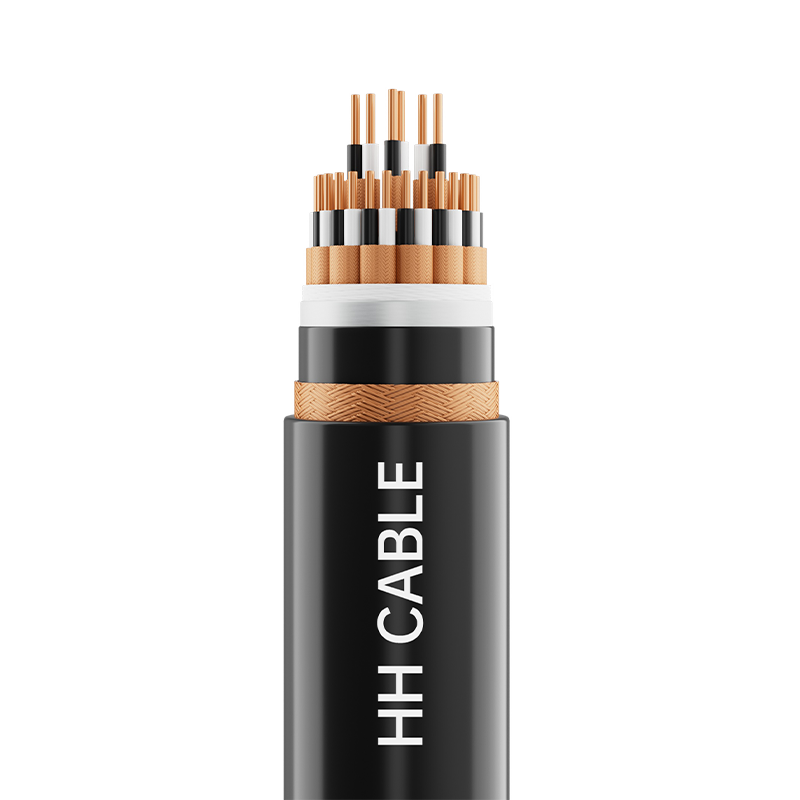
Termite resistant cables are not a single product category — they span the full voltage range from low-voltage control and instrument cables up to medium-voltage power cables. The termite protection layer is an add-on to the base cable construction, which means a given project may require termite resistant versions of several different cable types simultaneously.
In the Chinese market and for export products manufactured to GB standards, termite resistant cables carry a "FY" designation in their type code — for example, ZR-YJV22-FY for a flame-retardant XLPE insulated, steel tape armoured, termite resistant power cable. The FYS designation covers cables with combined termite and rodent resistance, adding a harder compound layer alongside the physical termite barrier. International projects may specify to IEC, BS, or ASTM standards with the termite protection requirement called out as a special requirement in the cable schedule.
Voltage levels typically available in termite resistant configurations include:
- 300/500 V and 450/750 V — control cables, instrument cables, computer cables for substation and industrial control circuits in termite-active zones.
- 0.6/1 kV — low-voltage power cables for distribution within buildings and between buildings in tropical infrastructure projects.
- 3.6/6 kV to 26/35 kV — medium-voltage distribution cables for utility and industrial power systems in high-risk regions.
Conductor materials are typically annealed copper or aluminium, with cross-sections sized to the project's current-carrying requirements independent of the termite protection specification. Adding a nylon or HDPE outer sheath adds minimal weight and does not affect the electrical parameters of the cable.
Where Termite Resistant Cable Is Required
Geographic risk is the primary driver of termite resistant cable specification, but it is not the only one. Several project scenarios make termite resistant cable the prudent choice regardless of location.
Direct burial installations are the highest-risk scenario. Any cable laid in soil without additional conduit protection is directly exposed to subterranean termite colonies that can number in the hundreds of thousands and extend metres in every direction from the main nest. In tropical and subtropical countries — including much of China south of the Yangtze River, Southeast Asia, South Asia, and sub-Saharan Africa — direct burial without termite protection should be considered unacceptable engineering practice for cables intended to serve a multi-decade design life.
Concrete slab penetrations and void spaces present a secondary risk category. Termites use mud tubes to travel from soil through wall cavities, expansion joints, and penetrations in concrete slabs. Cables entering a building at slab level can be attacked from the wall cavity side even when the external cable run is protected by conduit. Termite resistant sheathing on the slab penetration section eliminates this exposure point.
Utility infrastructure in tropical zones — power grid distribution cables, telecom feeder cables, and railway signalling cables — are all sectors where termite-driven cable failures have caused significant service disruptions in documented case histories. Specifying termite resistant cables at the project design stage is a fraction of the cost of an emergency cable replacement after a fault, particularly when the affected cables are buried under roads, rail tracks, or building foundations.
Henghui's infrastructure and construction cable range covers direct burial applications, and the company's broader industrial cable product series includes control and instrument cables configurable for termite-active installation environments.
Comparing Termite Protection Methods: Physical Barrier vs Hard Sheath
Project engineers typically face a straightforward binary choice when specifying termite protection: steel armouring for maximum physical barrier performance, or a nylon/HDPE outer sheath for a lighter, more flexible alternative. Each has a clear set of trade-offs.
| Factor | Steel Wire Armoured (SWA) | Nylon/HDPE Outer Sheath |
|---|---|---|
| Termite resistance | Excellent — proven physical barrier | Excellent — hardness prevents mandible purchase |
| Mechanical protection | Excellent — resists impact and crushing | Moderate — outer sheath only |
| Weight | Heavy | Light — comparable to standard cable |
| Flexibility | Limited — larger bending radius | Good — similar to unarmoured cable |
| Installation cost | Higher — heavier, requires grounding of armour | Lower — standard installation practices |
| Best application | Direct burial in rocky or high-traffic soil; where mechanical damage is also a risk | Duct-and-conduit routes in high-termite-risk zones; flexible pulls |
For projects in regions where both termites and mechanical damage from ground movement or digging activity are realistic risks, steel wire armoured cable with a hard outer sheath provides the most complete protection. In urban infrastructure projects where cables are pulled through pre-installed ducts — protecting them from mechanical damage — a nylon-jacketed cable offers termite resistance at substantially lower weight and cost.
Power infrastructure cables, including PVC insulated power cables rated for distribution networks and cross-linked polyethylene insulated cables for medium-voltage grid applications, can both be supplied with termite resistant outer construction where the project specification requires it.
Installation Best Practices for Termite Resistant Cable
Even the best termite resistant cable can be compromised during installation if basic precautions are ignored. The termite protection layer works by denying the insects a surface they can grip — and any installation damage that creates a nick, tear, or exposed edge undoes that engineering.
Three practices make the difference between a well-protected cable and one that remains vulnerable:
- Inspect sheath integrity before backfilling — Walk the complete cable run and visually inspect the outer sheath for installation damage before any soil is returned to the trench. Nylon and HDPE sheaths are tougher than flexible PVC but can still be scored by sharp rocks or the edges of duct fittings under pulling tension. Any damaged section should be repaired or replaced before burial.
- Seal all termination ends — Cut cable ends are the highest-risk attack points because the mandibles of termites can gain immediate grip on exposed conductor insulation or inner sheath at a clean-cut face. Termination sleeves, heat-shrink end caps, or purpose-designed anti-termite glands should be used at every cable end that enters soil or a wall void.
- Maintain separation from wood and cellulose materials — In direct burial runs, cables should be routed at least 150 mm away from buried timber formwork, tree roots, or organic backfill material. Termite colonies are attracted to cellulose sources; proximity increases the probability of incidental cable attack during foraging activity around the primary food target.
Specifying the correct termite resistant cable type for the installation environment, and installing it with the care the protection layer deserves, gives underground cable infrastructure the service life it was designed to deliver — even in the most challenging biological environments.
PREV:Cable Crimps for Control Cables: Selection, Installation & Quality Standards
NEXT:PVC Insulated Control Cable: Specifications, Applications & Selection Guide
NEXT:PVC Insulated Control Cable: Specifications, Applications & Selection Guide
Interested in cooperation or have questions?
Featured Products
Comprehensive Cable Solutions


Ready To Customise
Your Cable Products?
Your Cable Products?

Customized Cable Solutions, Bulk Wire Supplier in China. Relying on genuine core quality to build a renowned brand, striving to become a benchmark for advanced
cable standards.
Product Categories
Quick Links
Contact Us
-
Email: [email protected]

-
Mobile: +86-0510-87296815

-
Fax: +86-0510-87295158

-
No. 1, Fengyi Jinfeng Road, Guanlin Town, Yixing City, Jiangsu Province, China

Copyright © Wuxi Henghui Cable Co., Ltd. All Rights Reserved. Custom Cable Manufacturers Electrical Cables Factory
