


 English
 中文简体
中文简体 русский
PVC Insulated Control Cable: Specifications, Applications & Selection Guide
PVC Insulated Control Cable: Specifications, Applications & Selection Guide
PVC Insulated Control Cable: Specifications, Applications & Selection Guide
PVC Insulated Control Cable: Specifications, Applications & Selection Guide
PVC Insulated Control Cable: Specifications, Applications & Selection Guide
PVC Insulated Control Cable: Specifications, Applications & Selection Guide
PVC Insulated Control Cable: Specifications, Applications & Selection Guide
PVC Insulated Control Cable: Specifications, Applications & Selection Guide
PVC Insulated Control Cable: Specifications, Applications & Selection Guide
PVC Insulated Control Cable: Specifications, Applications & Selection Guide
PVC Insulated Control Cable: Specifications, Applications & Selection Guide
PVC Insulated Control Cable: Specifications, Applications & Selection Guide
PVC Insulated Control Cable: Specifications, Applications & Selection Guide
PVC Insulated Control Cable: Specifications, Applications & Selection Guide
PVC Insulated Control Cable: Specifications, Applications & Selection Guide
PVC Insulated Control Cable: Specifications, Applications & Selection Guide

Industry News
Home / News / Industry News / PVC Insulated Control Cable: Specifications, Applications & Selection Guide
Product Category
NEW Category
Contact us
 +86-0510-87296815
PVC Insulated Control Cable: Specifications, Applications & Selection Guide
Content
What Is PVC Insulated Control Cable?
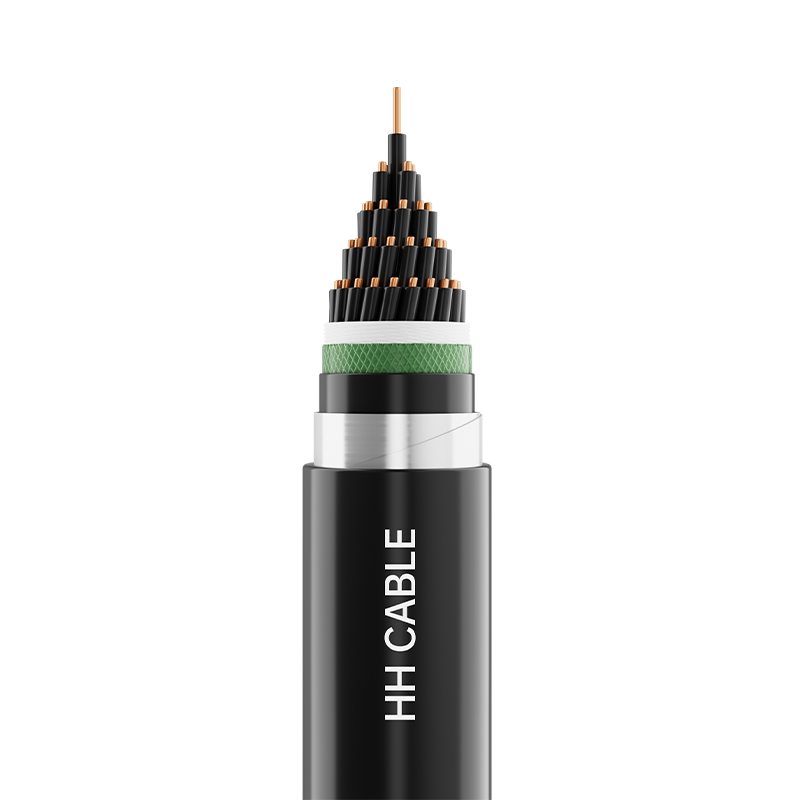
Control cables and power cables share the same basic anatomy — conductors, insulation, sheath — but they serve fundamentally different roles. A PVC insulated control cable is designed to carry low-level signals and switching commands between instruments, sensors, switchgear, and control panels, rather than delivering main power to motors or loads. The distinction matters because control circuits demand higher core counts, tighter dimensional tolerances, and predictable signal integrity over the full lifecycle of an installation.
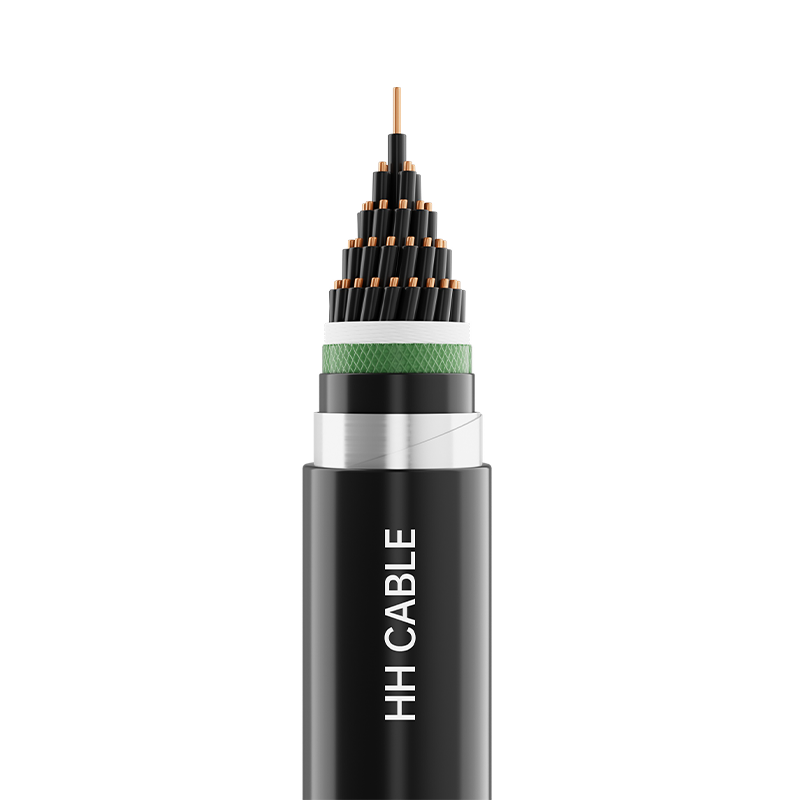
The construction of a standard PVC insulated control cable starts with a stranded copper conductor, chosen for its combination of conductivity and flexibility. Each core is individually wrapped with polyvinyl chloride (PVC) insulation, colour-coded for easy identification during installation and maintenance. The cores are then laid up together — sometimes around a central filler to maintain a round profile — and an overall PVC outer sheath is extruded to protect the assembly from mechanical abrasion, moisture, and mild chemical exposure.
Shielded variants add an aluminium-polyester tape or braided tinned copper layer between the cores and the outer sheath. This shield is grounded at one end to divert induced interference away from the signal conductors, making shielded PVC control cable the standard choice wherever variable-frequency drives, welding equipment, or high-current switchgear operate nearby.
Key Technical Specifications
The rated voltage for PVC insulated control cable is typically 450/750 V, meaning 450 V phase-to-earth and 750 V phase-to-phase under normal AC power frequency conditions. This places the product firmly in the low-voltage category governed by international and national standards including IEC 60227 and GB/T 9330.
| Parameter | Specification |
|---|---|
| Rated Voltage | 450/750 V |
| Max. Conductor Temperature (normal operation) | 70 °C |
| Short-Circuit Temperature (max. 5 s) | 160 °C |
| Min. Installation Temperature | -15 °C (static laying) |
| Number of Cores | 2 – 61 cores (project-dependent) |
| Conductor Cross-Section | 0.5 mm² – 10 mm² |
| Conductor Material | Stranded annealed copper (Class 2) |
| Insulation / Sheath Material | Polyvinyl chloride (PVC) |
The governing international framework for PVC-insulated cables is the IEC 60502 series published by the International Electrotechnical Commission, which defines construction requirements, test methods, and dimensional limits. Chinese national standard GB/T 9330 mirrors this framework for the domestic market and is the baseline applied by Henghui in production.
Core identification follows a colour-coding system — typically black cores with numbered white printing for cables with more than five cores, or direct colour-coded cores (black, brown, red, orange, yellow, etc.) for lower core counts. Both systems are permitted under IEC and GB standards, and the choice is often project-specified.
Construction and Material Advantages of PVC Insulation
Polyvinyl chloride has been the dominant cable insulation material for industrial control wiring for decades, and for good reason. Its processing characteristics allow manufacturers to achieve very consistent wall thicknesses at production speeds that keep unit costs competitive. That consistency translates directly into reliable dielectric strength across every metre of a finished reel.
From an application standpoint, PVC insulation offers three practical advantages that matter on real installation sites:
- Chemical resistance — PVC withstands exposure to oils, dilute acids, and alkalis that are common in manufacturing environments, protecting the copper conductors underneath from corrosion-driven degradation over multi-decade service lives.
- Inherent flame retardancy — PVC does not support combustion in the same way that polyethylene does. Standard PVC-sheathed control cables pass IEC 60332-1 single-cable flame propagation tests without any additive treatment, simplifying fire-safety compliance for panel builders and contractors.
- Installation flexibility — The material remains pliable down to around -15 °C during static installation, and stranded copper conductors with Class 2 construction allow tight-radius bends without conductor damage, which is critical inside congested marshalling cabinets.
The outer sheath provides a second barrier against moisture ingress and mechanical abrasion during pulling through conduit. Because PVC bonds well to itself and to copper shielding tapes, armoured variants can include steel wire armouring (SWA) or steel tape armouring (STA) directly beneath the outer sheath without adhesion problems — an important consideration for cables routed in cable trays where repeated foot traffic is a hazard.
Industrial Applications
PVC insulated control cable is the backbone wiring of any system where discrete signals need to travel reliably from a field device back to a control room or PLC cabinet. The breadth of applications is one reason why multi-core counts from 4 to 61 are catalogued: different processes need radically different numbers of I/O points in a single home-run cable.
Manufacturing and process industries represent the largest demand sector. On an automotive assembly line, for example, a single marshalling cabinet may aggregate proximity sensor outputs, pneumatic valve commands, and safety relay signals — all carried back on PVC control cables routed in dedicated cable trays separated from power circuits. In chemical plants, the cables run from field transmitters measuring temperature, pressure, and flow to distributed control system (DCS) input cards mounted in the control building.
For installations that also involve motor drive equipment, variable frequency power cables designed for motor drive systems handle the high-frequency drive output, while separate screened control cables carry the speed reference and fault signals — keeping power and signal wiring segregated.
Infrastructure and building applications also rely heavily on PVC control cable. Fire alarm loops, access control wiring, elevator control circuits, and HVAC control panels all use multi-core PVC control cable as the preferred interconnection medium. Where instrumentation-grade signal integrity is required, computer and instrument cables designed for precision signal transmission at 300/500 V may be specified instead, particularly for thermocouple extension and analogue 4–20 mA loops.
How to Select the Right PVC Control Cable
Choosing the correct specification before ordering avoids costly rework during commissioning. Four parameters drive the decision for the vast majority of projects:
- Voltage rating — Confirm the maximum voltage that the control circuit operates at. For standard PLC and relay-based systems running at 24 V DC or 230 V AC, the 450/750 V rating provides ample margin. Higher-voltage control circuits — such as those in substation auxiliary equipment — may require a 0.6/1 kV rated cable.
- Core count and cross-section — Map every signal that needs to travel in a single cable run. Add a spare of 10–20% for future expansion. Cross-sections of 1.5 mm² cover most digital I/O; analogue signal cables are commonly 0.75 mm² or 1.0 mm² to limit resistance-induced voltage drops over long runs.
- Shielded or unshielded — Choose unshielded cables for clean environments with well-separated cable routes. Opt for overall-screened cable in any installation within 10 metres of VFDs, large contactors, or radio transmitters. Individually screened pairs or triplets are required for analogue signals on long runs.
- Special environmental requirements — Standard PVC suits most indoor and protected outdoor applications. Flame-retardant (ZR prefix) or halogen-free low-smoke (LSZH) variants are required in public buildings, tunnels, and confined spaces where smoke toxicity during a fire is a primary concern.
Henghui's full industrial cable product range covers standard, flame-retardant, armoured, and screened configurations, allowing a single-source procurement approach for complex projects with diverse cable requirements.
PVC vs XLPE Insulated Control Cable: Which to Choose?
The most common specification decision on multi-system projects is whether to standardise on PVC or cross-linked polyethylene (XLPE) insulated control cable. Both comply with relevant IEC and GB standards; the differences lie in their thermal and mechanical behaviour.
| Property | PVC Insulated | XLPE Insulated |
|---|---|---|
| Max. continuous conductor temperature | 70 °C | 90 °C |
| Short-circuit temperature limit | 160 °C | 250 °C |
| Current-carrying capacity | Standard | ~25–30% higher for same cross-section |
| Flexibility at low temperature | Good (to -15 °C) | Slightly stiffer below -10 °C |
| Relative cost | Lower | Higher |
| Typical application | Standard industrial control circuits | High-temperature environments, compact switchgear |
For the majority of factory automation and building control applications where ambient temperatures stay below 40 °C and conductor loading is moderate, PVC insulated control cable is the cost-effective default. XLPE becomes the better choice when cables pass through hot zones such as furnace areas, or when designers need to maximise current capacity without increasing conductor cross-section. For those installations, Henghui's cross-linked polyethylene insulated control cable for higher-temperature applications covers the same voltage and core count range as the PVC series.
When the operating environment and budget both support PVC, its proven track record, wide installer familiarity, and lower procurement cost make it the rational, well-supported choice for long-term infrastructure projects.
PREV:Termite Resistant Cable: How It Works, Key Types & Selection Guide
NEXT:Control Cables & Low Voltage Power Cable Guide
NEXT:Control Cables & Low Voltage Power Cable Guide
Interested in cooperation or have questions?
Featured Products
Comprehensive Cable Solutions


Ready To Customise
Your Cable Products?
Your Cable Products?

Customized Cable Solutions, Bulk Wire Supplier in China. Relying on genuine core quality to build a renowned brand, striving to become a benchmark for advanced
cable standards.
Product Categories
Quick Links
Contact Us
-
Email: [email protected]

-
Mobile: +86-0510-87296815

-
Fax: +86-0510-87295158

-
No. 1, Fengyi Jinfeng Road, Guanlin Town, Yixing City, Jiangsu Province, China

Copyright © Wuxi Henghui Cable Co., Ltd. All Rights Reserved. Custom Cable Manufacturers Electrical Cables Factory
