


 English
 中文简体
 русский
Power Line Cables: Selection by Voltage, Route, Insulation, and Test Regime
Power Line Cables: Selection by Voltage, Route, Insulation, and Test Regime
Power Line Cables: Selection by Voltage, Route, Insulation, and Test Regime
Power Line Cables: Selection by Voltage, Route, Insulation, and Test Regime
Power Line Cables: Selection by Voltage, Route, Insulation, and Test Regime
Power Line Cables: Selection by Voltage, Route, Insulation, and Test Regime
Power Line Cables: Selection by Voltage, Route, Insulation, and Test Regime
Power Line Cables: Selection by Voltage, Route, Insulation, and Test Regime
Power Line Cables: Selection by Voltage, Route, Insulation, and Test Regime
Power Line Cables: Selection by Voltage, Route, Insulation, and Test Regime
Power Line Cables: Selection by Voltage, Route, Insulation, and Test Regime
Power Line Cables: Selection by Voltage, Route, Insulation, and Test Regime
Power Line Cables: Selection by Voltage, Route, Insulation, and Test Regime
Power Line Cables: Selection by Voltage, Route, Insulation, and Test Regime
Power Line Cables: Selection by Voltage, Route, Insulation, and Test Regime
Power Line Cables: Selection by Voltage, Route, Insulation, and Test Regime

Industry News
Home / News / Industry News / Power Line Cables: Selection by Voltage, Route, Insulation, and Test Regime
Product Category
NEW Category
Contact us
 +86-0510-87296815
Power Line Cables: Selection by Voltage, Route, Insulation, and Test Regime
A 10 kV feeder upgrade at an industrial park often runs into a familiar problem: the cable looks correct on the one-line diagram, but it fails commissioning because the metallic screen, sheath, and bending radius do not match the actual route. Power line cables are not one product; they are a voltage-and-route-specific system. The practical conclusion is simple: select by voltage class, fault level, installation method, environmental exposure, and test regime before comparing price per meter.
Key takeaway: for 1–110 kV projects, the lowest evaluated cost is not the lowest quotation. A cable that is correctly sized for thermal load, moisture, and mechanical pull will usually cost less over 25 years than a cheap cable with higher losses or a shorter service life.
Content
- 1 What Power Line Cables Include—and Where the Boundaries Sit
- 2 Core Construction: What Actually Carries and Protects the Current
- 3 Voltage Class and Route: A Practical Comparison
- 4 Hidden Failure Drivers in Power Line Cables
- 5 Where Power Line Cables Are Used: Application Split
- 6 Selection and ROI: A Six-Step Process
- 7 Maintenance, Testing, and Compliance
- 8 What to Confirm Before Ordering
What Power Line Cables Include—and Where the Boundaries Sit
In distribution and transmission work, “power line cables” usually covers insulated underground cables, overhead insulated cables, and bare overhead conductors. The voltage class changes the construction, but the job is the same: carry current safely, withstand faults, and survive the route for decades.
- 0.6/1 kV cables for building services, industrial feeders, and low-voltage distribution.
- 6/35 kV XLPE cables for medium-voltage distribution, substation connections, and industrial plants.
- 66/110 kV XLPE cables for high-voltage transmission links, substation outlets, and city grid reinforcement.
- 1 kV and 10 kV overhead insulated cables for urban and rural overhead distribution.
- Steel-reinforced aluminum and concentric stranded overhead conductors for longer spans and mechanical strength.
Henghui Cable manufactures 1–110 kV power line cables in this range, including XLPE-insulated power cables, PVC-insulated power cables, overhead insulated cables, and overhead conductors. That width matters because a utility project may need medium-voltage cable, overhead conductor, and low-voltage control cable in the same package.
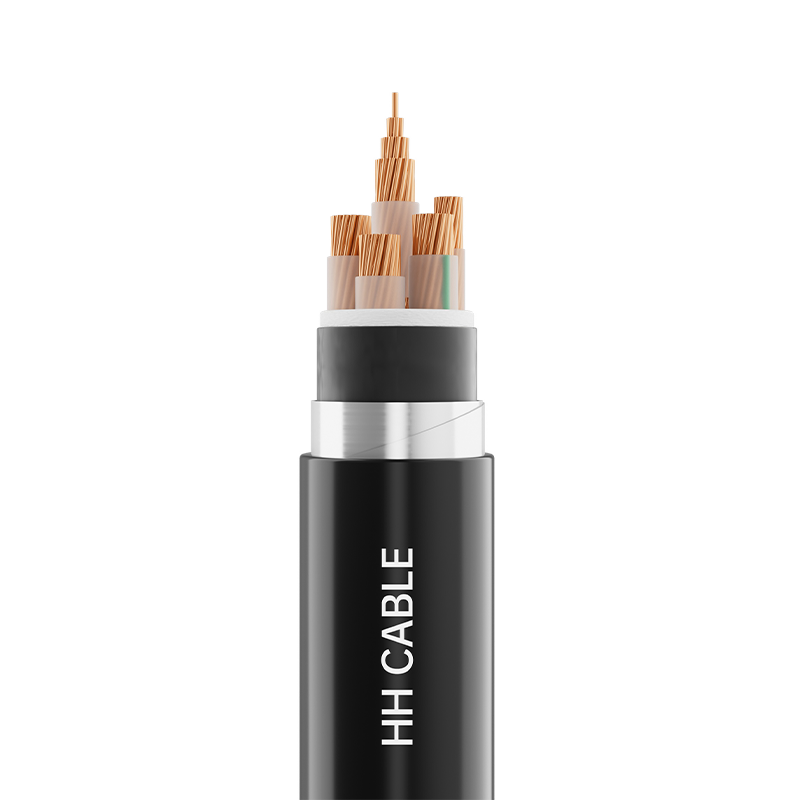 1.8/3 kV XLPE Insulated Power CablesFor 0.6/1 kV and 1.8/3 kV distribution, these XLPE cables support fixed indoor, outdoor, duct, tray, and direct-burial installation with copper or aluminum conductors.View Product →
The 1–83 kV XLPE range is the workhorse for distribution networks: it covers common feeder voltages and uses cross-linked polyethylene insulation for higher temperature ratings and lower dielectric losses than PVC in the same size. The exact voltage designation and screen construction still need to match the project’s insulation coordination and fault level.
Core Construction: What Actually Carries and Protects the Current
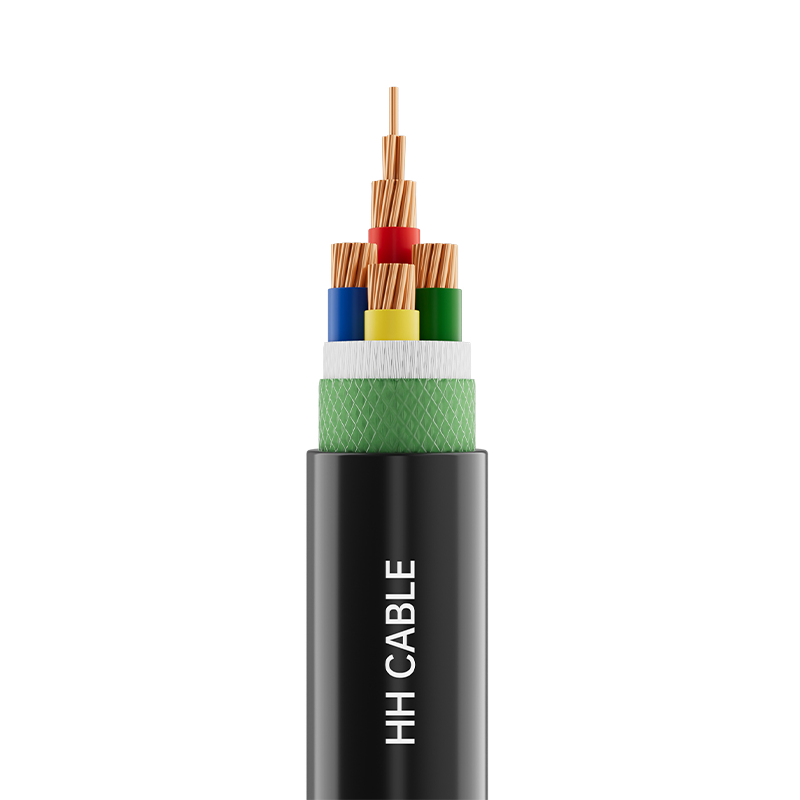
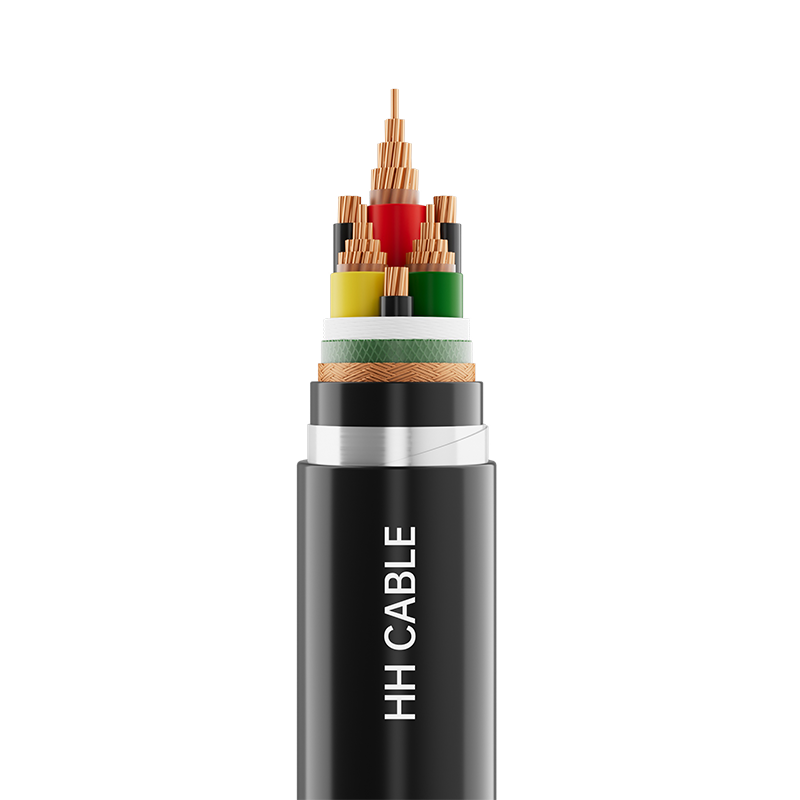
A power cable is a layered system. The conductor carries current; the insulation holds voltage; the screens control electric stress; the metallic screen carries fault current; and the sheath keeps water out. A weakness in any layer changes the cable’s real rating, even if the copper size is correct.
Conductor
Copper or aluminum, stranded or compacted. Aluminum is common on larger feeders where weight and cost matter; copper is often preferred where space, joints, or short-circuit duty are tight.
Insulation
XLPE is standard for 6–110 kV because it tolerates higher conductor temperatures. PVC remains common at low voltage and in some control duties, but it has lower thermal limits.
Screens
Semiconductive conductor and insulation screens smooth the electric field. At medium and high voltage, a missing or damaged screen is a partial-discharge risk, not a cosmetic defect.
Sheath and armor
PE, PVC, or LSZH sheaths resist moisture and chemicals. Armor adds mechanical protection for buried or heavily trafficked routes, but it must be bonded correctly.
At 66/110 kV, the screen and sheath design becomes a major engineering item. Water-blocking tape, longitudinal water tightness, and sheath voltage limitation need to be reviewed together with jointing and termination design. A high-voltage cable is only as good as its accessories and installation crew.
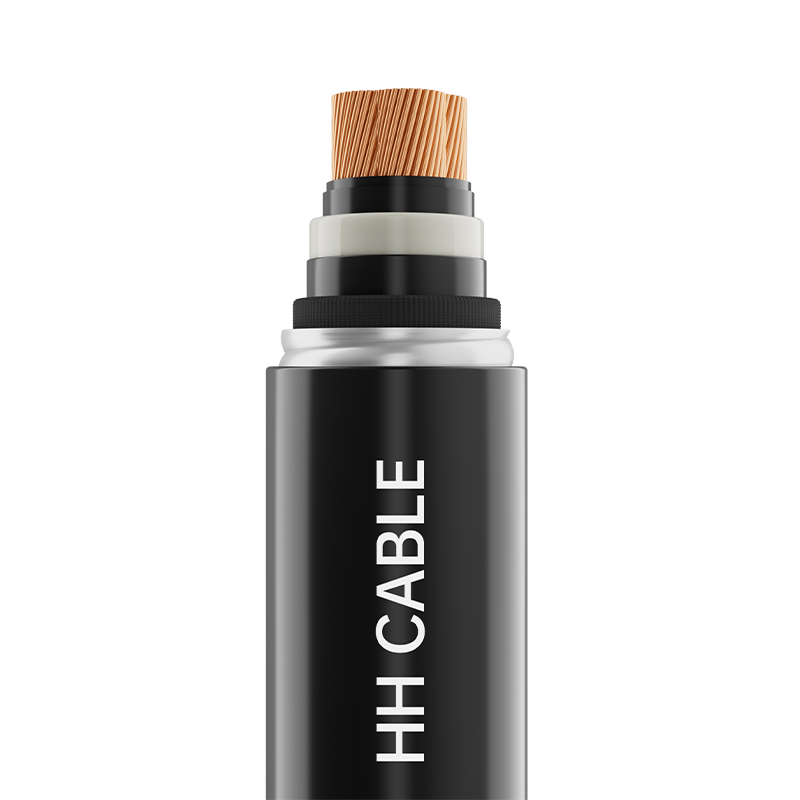 66–110 kV XLPE High-Voltage Power CableFor transmission and urban distribution, the cable offers 38/66 kV to 64/110 kV ratings, 240–2000 mm² conductors, and optional radial or longitudinal water blocking.View Product →
Voltage Class and Route: A Practical Comparison
For the same load, overhead lines usually have lower capital cost and are easier to repair after damage. Underground cables have lower visual impact and better storm resilience, but they cost more to install and are harder to fault-locate. The right choice is route-specific, not ideological.
Comparison is based on typical 1–110 kV projects; final values should be checked against fault level, local grid code, and route conditions.
Hidden Failure Drivers in Power Line Cables
Most in-service failures are not caused by “bad copper” alone. Installation damage, moisture ingress, and sustained overload tend to expose weaknesses that were already present in the design or handling. The pattern below is a practical planning order, not a universal statistic.
34%
Installation damage
22%
Moisture ingress
18%
Thermal overload
14%
Sheath damage
12%
Material aging
For 10 kV overhead insulated cable, check insulation thickness, UV stability, and tie-wire protection. For underground medium-voltage cable, specify minimum bending radius, pull tension, sidewall pressure, and water-blocking construction. These details are cheaper to design in than to repair after energization.
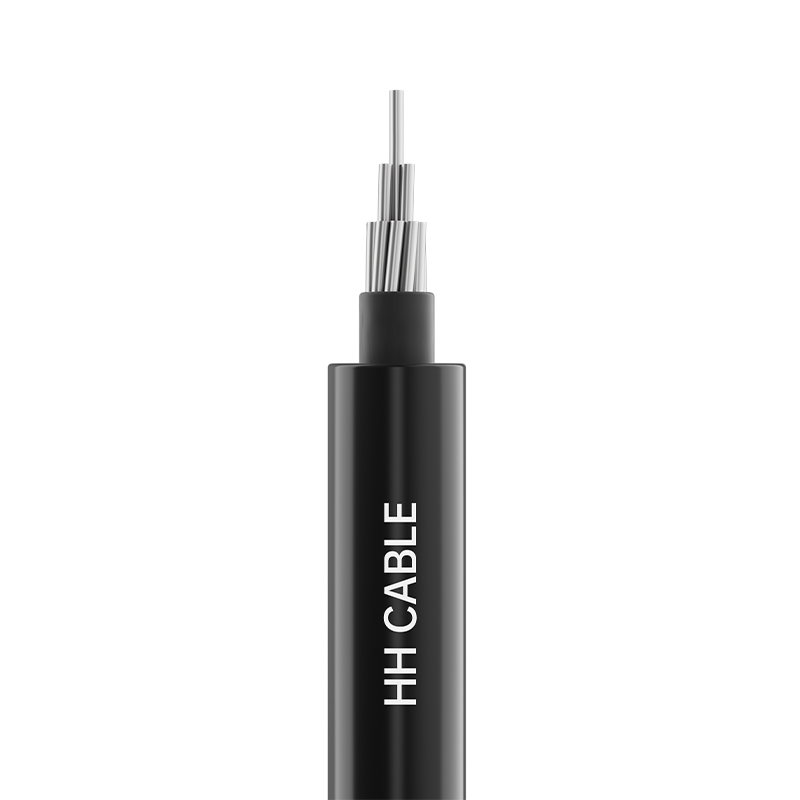 10 kV Overhead Insulated Distribution CableFor urban and rural 10 kV overhead distribution, these cables use copper, aluminum, or alloy conductors with weather-resistant insulation, reducing shock risk versus bare conductors.View Product →
Where Power Line Cables Are Used: Application Split
A manufacturer’s order mix is not the global market, but it shows where specification effort concentrates. Utility grid work remains the largest block; construction, industrial, renewable, and rail projects each bring different approval and testing requirements.
- Grid transmission and distribution: 46%
- Infrastructure and construction: 20%
- Industrial and automation: 16%
- Renewable energy: 12%
- Rail transit: 6%
The renewable share includes solar DC cable and AC collection cable, but the same project may also need medium-voltage XLPE cable for the grid connection. Buyers should avoid treating “solar cable” and “power line cable” as separate universes; the interface between them is where scope gaps appear.
Selection and ROI: A Six-Step Process
The lowest evaluated cost includes losses, installation, fault repair, and downtime. A 1% reduction in conductor losses on a heavily loaded 10 kV feeder can outweigh a modest price premium, especially when the cable runs at high load for many hours per year.
1
Confirm voltage and fault level
Do not size from load alone. Check short-circuit withstand and insulation coordination.
2
Map the route
Record bends, pull lengths, burial depth, water level, and future excavation risk.
3
Size the conductor
Check continuous current, cyclic loading, voltage drop, and future load growth.
4
Set insulation and screen
Match XLPE thickness, screen bonding, and sheath to the earthing and moisture plan.
5
Agree testing
Specify routine tests, partial discharge, sheath test, and after-installation commissioning.
6
Compare lifecycle cost
Include losses, joints, terminations, fault repair, and outage cost—not just cable price.
Maintenance, Testing, and Compliance
Commissioning tests catch handling damage before the cable is energized. For medium and high voltage, partial discharge testing is more informative than a simple insulation resistance check. For sheath and jacket, a DC sheath test helps confirm that moisture cannot reach the metallic screen through a handling defect.
- Review test certificates against IEC 60502 or IEC 60840, as applicable, and the project specification.
- Inspect drums, sheath, and end caps on arrival; record any impact or moisture exposure.
- Control bending radius and pull tension during installation; photograph the route before backfill.
- Use thermography and partial discharge mapping in preventive maintenance for critical feeders.
- Keep joints, terminations, and earthing records with the cable schedule for future fault tracing.
For infrastructure projects, fixed wiring and power distribution cables are often specified together; the differences in fire performance, sheath material, and testing are summarized in this guide to infrastructure construction cables. Utility pre-qualification and third-party inspection are also part of compliance, not paperwork added at the end.
What to Confirm Before Ordering
Before releasing a purchase order for power line cables, confirm the voltage designation, conductor size and material, insulation type, screen and sheath construction, standards, test plan, drum length, and delivery sequence. For overhead work, include sag, span, and clearance requirements. For underground work, include jointing responsibility and moisture protection. A clear technical data sheet prevents the most expensive mistake: buying a cable that is compliant on paper but mismatched to the route.
PREV:PUR Cable Material: Jacket Performance, Cost Trade-Offs and Selection Rules
NEXT:What Is MI Cable? Mineral Insulated Cable Construction, Ratings and Selection
NEXT:What Is MI Cable? Mineral Insulated Cable Construction, Ratings and Selection
Interested in cooperation or have questions?
Featured Products
Comprehensive Cable Solutions
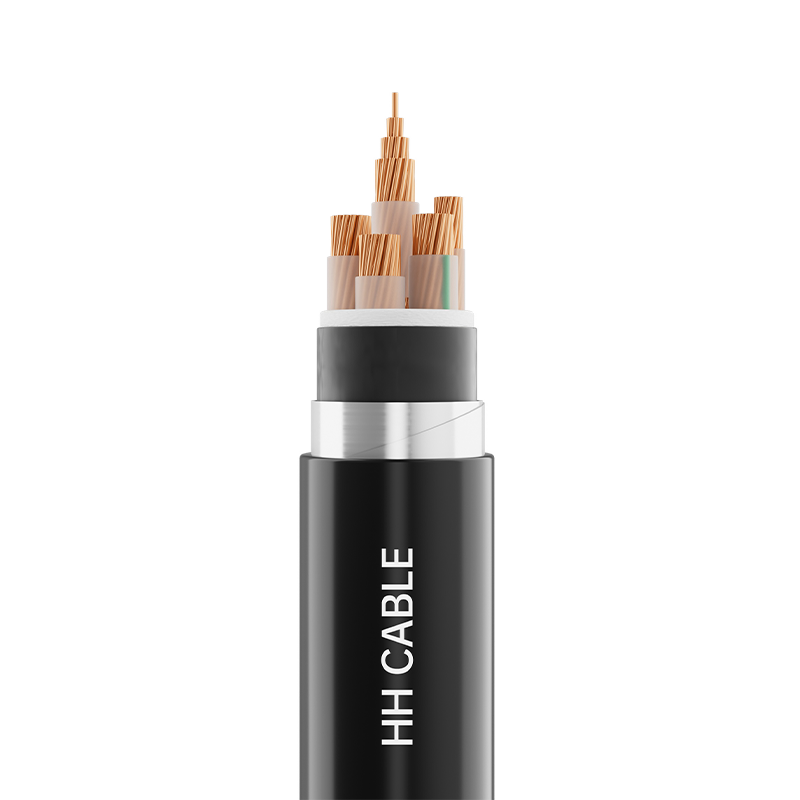


Ready To Customise
Your Cable Products?
Your Cable Products?

Customized Cable Solutions, Bulk Wire Supplier in China. Relying on genuine core quality to build a renowned brand, striving to become a benchmark for advanced
cable standards.
Product Categories
Quick Links
Contact Us
-
Email: [email protected]

-
Mobile: +86-0510-87296815

-
Fax: +86-0510-87295158

-
No. 1, Fengyi Jinfeng Road, Guanlin Town, Yixing City, Jiangsu Province, China

Copyright © Wuxi Henghui Cable Co., Ltd. All Rights Reserved. Custom Cable Manufacturers Electrical Cables Factory
