


 English
 中文简体
 русский
PUR Cable Material: Jacket Performance, Cost Trade-Offs and Selection Rules
PUR Cable Material: Jacket Performance, Cost Trade-Offs and Selection Rules
PUR Cable Material: Jacket Performance, Cost Trade-Offs and Selection Rules
PUR Cable Material: Jacket Performance, Cost Trade-Offs and Selection Rules
PUR Cable Material: Jacket Performance, Cost Trade-Offs and Selection Rules
PUR Cable Material: Jacket Performance, Cost Trade-Offs and Selection Rules
PUR Cable Material: Jacket Performance, Cost Trade-Offs and Selection Rules
PUR Cable Material: Jacket Performance, Cost Trade-Offs and Selection Rules
PUR Cable Material: Jacket Performance, Cost Trade-Offs and Selection Rules
PUR Cable Material: Jacket Performance, Cost Trade-Offs and Selection Rules
PUR Cable Material: Jacket Performance, Cost Trade-Offs and Selection Rules
PUR Cable Material: Jacket Performance, Cost Trade-Offs and Selection Rules
PUR Cable Material: Jacket Performance, Cost Trade-Offs and Selection Rules
PUR Cable Material: Jacket Performance, Cost Trade-Offs and Selection Rules
PUR Cable Material: Jacket Performance, Cost Trade-Offs and Selection Rules
PUR Cable Material: Jacket Performance, Cost Trade-Offs and Selection Rules

Industry News
Home / News / Industry News / PUR Cable Material: Jacket Performance, Cost Trade-Offs and Selection Rules
Product Category
NEW Category
Contact us
 +86-0510-87296815
PUR Cable Material: Jacket Performance, Cost Trade-Offs and Selection Rules
A water-treatment plant replaced the same drag-chain cable three times in two years. The copper was fine on every return — the PVC jacket had hardened, flattened where the chain rolled over it, and split open at the flex point. Moving that one run to a polyurethane-sheathed cable ended the pattern. Not because PUR is a miracle compound, but because the failure mode was abrasion plus cold flow, and polyurethane is the material that resists both.
The short answer: PUR cable material is a polyurethane jacket compound specified where a cable must survive repeated flexing, sharp edges, oil mist, and cold. Expect roughly 1.5 to 2.5 times the jacket cost of an equivalent PVC construction, several times the abrasion life, and usable flexibility down to about -40 °C.
It is the wrong choice for continuous hot-water immersion, for tight static bends in a cabinet, and for any indoor run where the cable will never move and the budget is already tight.
Content
What PUR Cable Material Actually Is
PUR is a sheath, not an insulation. In a typical industrial cable the conductors are stranded copper with PVC, PE or XLPE insulation, wrapped with fillers and a screen, and then a polyurethane jacket is extruded over the assembly. When a drawing calls for "PUR cable", it is specifying the outer jacket. That distinction matters in purchasing: the jacket decides oil resistance, abrasion life and cold flexibility, while the voltage class and current rating come from the conductor and insulation underneath.
Continuous flex
Formulated PUR compounds resist notch propagation, so a small nick stays small. That is why the material dominates cable carrier and robot-arm runs.
Chemical exposure
Strong against mineral oils, greases, coolants and dilute acids. Weak against hot water, strong alkalis, and aromatic solvents such as toluene.
Temperature window
Most flexible grades run about -40 °C to +80 °C continuously, with short excursions higher. Always confirm against the compound datasheet, not the catalogue headline.
Halogen-free
PUR contains no halogens, so it can meet IEC 60754 acid-gas limits. Flame retardance depends entirely on the specific compound, so ask for the test report.
One detail that separates a good purchase from a bad one: polyester versus polyether base. Polyether grades hold up far better in warm, humid plants, while polyester grades win on abrasion and oil but degrade quickly in hot water. A datasheet that says only "PUR" has not told you enough to judge the hydrolysis risk.
PUR vs PVC vs TPE: The Numbers Buyers Compare
Table: indicative comparison of common jacket materials; exact figures depend on the compound, the certification and the cable size.
The decision rule behind those numbers is simple. If the cable is fixed indoors with no oil, stay with PVC and spend the savings on copper. If halogen-free behaviour and cold flexibility matter but oil is light, TPE is a reasonable middle. If the run moves, rubs, or sits in cutting fluid, PUR pays for itself the first time you avoid a shutdown.
In practice a PUR jacket is rarely a stand-alone order — it wraps a control or instrumentation core. For a jacketed control cable with a fully rated core, see our industrial cable range, where sheath compound and core construction are specified together.
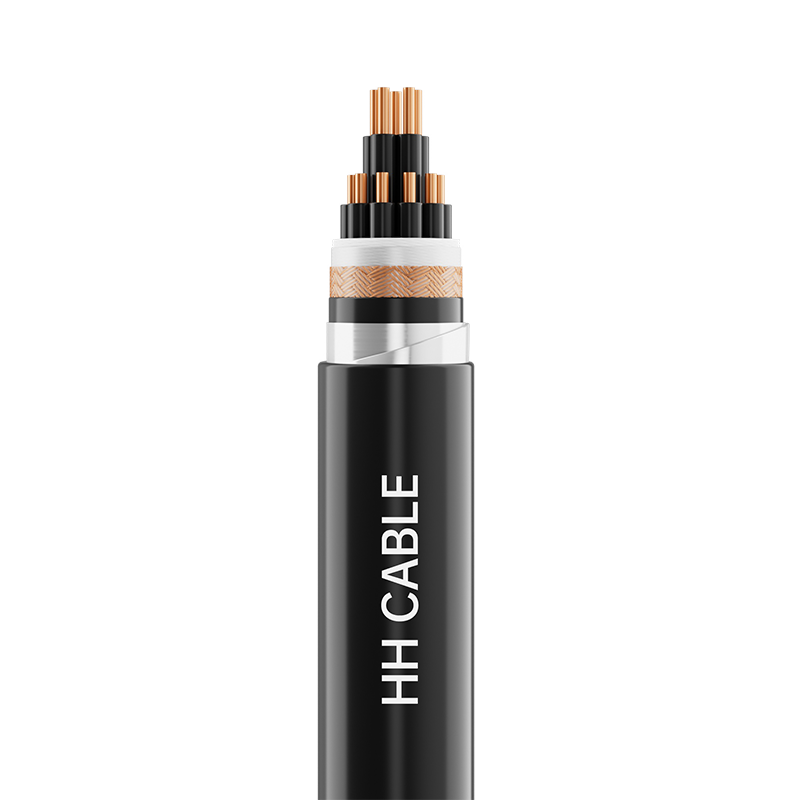 450/750V XLPE Insulated Control CableXLPE-insulated control cable for 450/750V systems, with shielded, armored and flexible variants for fixed indoor, outdoor or buried installation.View Product →
Hidden Costs That Appear After Commissioning
The jacket is usually 15 to 25 percent of a cable's purchase price, yet it drives most of the unplanned downtime. That imbalance is why the cheap decision is rarely the cheap outcome. The chart below uses PVC as a baseline of 100 for abrasion cycles to failure under a standard reciprocating test.
PVC
index 100
TPE
index 300
PUR
index 800
Chart: relative abrasion resistance of jacket materials, PVC normalised to 100 (typical published test ranges).
Read that against labour. Replacing one drag-chain cable in a guarded machine can cost twenty times the price difference between a PVC and a PUR version. Now read it the other way: specifying PUR across an entire panel-build contract adds 20 to 40 percent to the cable budget and buys nothing, because those cables are clamped and never flex. The material only earns its premium where the failure mechanism is abrasion, oil or cold-bend cracking.
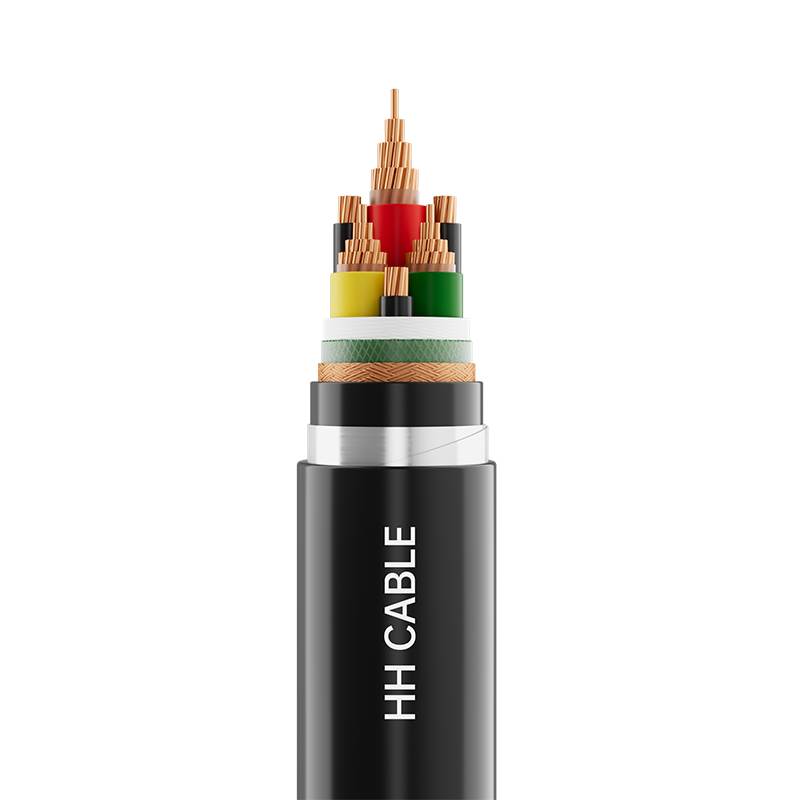 1kV Variable Frequency Power CableShielded 0.6/1kV variable-frequency power cable for VFD motor circuits, available with copper or tape shielding and optional armored or fire-resistant constructions.View Product →
Where PUR Earns Its Price: Application Mix
Machine tools and factory automation — 28%
Robotics and cable carriers — 22%
Automotive assembly lines — 18%
Material handling and cranes — 14%
Outdoor mobile equipment — 10%
Other industrial uses — 8%
Two of those slices need a warning. Outdoor mobile equipment is only a good fit when the jacket is carbon-black pigmented — a coloured PUR jacket will chalk and craze under UV within a couple of seasons. And in plants handling flammable atmospheres, the sheath choice is secondary to the circuit design; the intrinsic-safety principles covered in this guide to instrumentation cable in hazardous zones still govern the installation.
A Six-Step Selection Process
1. Define the motion
Static, occasional flex, or continuous flex in a carrier? Give the supplier the travel length, speed and acceleration, not just the cross-section.
2. List the chemicals
Cutting fluid, hydraulic oil and coolant are routine. Hot water, steam and strong alkali are the cases that rule PUR out.
3. Fix the temperature band
Use the coldest start-up condition, not the average ambient. Cold-impact cracking is a start-up failure, not a running failure.
4. Confirm the approvals
Check the flame test (IEC 60332-1-2, UL VW-1), the halogen-free claim (IEC 60754), and RoHS or REACH declarations for export orders.
5. Check the geometry
For continuous flex, plan a bend radius of at least 7.5 to 10 times the outer diameter, and confirm the core stranding matches the flex class.
6. Test before you commit
Order one drum, run it on the actual machine for a month, then cut a sample and check for jacket thinning or surface cracking.
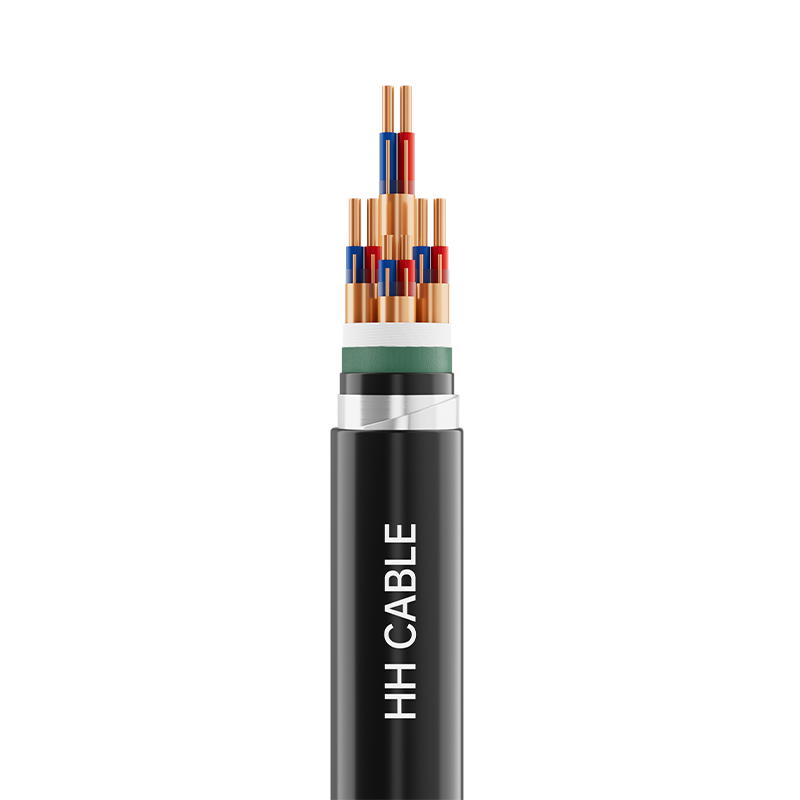 300/500V Computer and Instrument Cable300/500V instrumentation cable for DCS, PLC and sensor/actuator connections, with shielding, armor and halogen-free or fire-resistant options for industrial automation.View Product →
Maintenance and Compliance Notes
A PUR jacket survives longer, but it is not maintenance-free. These are the points that decide whether the cable reaches its rated life or fails early:
- Clamp only the fixed ends of a carrier run. A tie-wrap on a moving section creates a hard point where the jacket kinks.
- Keep the cable centred in the chain with a clearance of about 10 percent of its diameter, and never let it run at the chain's full travel limit.
- Inspect at commissioning, then quarterly for the first year. Look for jacket swelling, which points to chemical attack, and for flattening, which points to over-tight bending.
- Store indoors, away from sunlight and ozone sources such as welding equipment. Unprotected drums left outdoors will age the jacket before installation.
- For export projects, keep the compound datasheet, the flame test report and the halogen-free declaration with the delivery documents. A subcontractor's email confirmation is not evidence.
- Where a specification allows either PVC or PUR, state the material explicitly rather than leaving the choice to the supplier's standard stock.
Treat the jacket as an engineering decision with a measurable payoff, not as a line item to negotiate downward. When the material matches the motion, the chemical exposure and the temperature band, the premium disappears into the maintenance budget within a year or two. When it does not match, no discount on the drum price covers the cost of the shutdown that follows.
PREV:Armored Electrical Cable Guide: Armor Types, Sizing, Grounding, and Selection Risks
NEXT:Power Line Cables: Selection by Voltage, Route, Insulation, and Test Regime
NEXT:Power Line Cables: Selection by Voltage, Route, Insulation, and Test Regime
Interested in cooperation or have questions?
Featured Products
Comprehensive Cable Solutions


Ready To Customise
Your Cable Products?
Your Cable Products?

Customized Cable Solutions, Bulk Wire Supplier in China. Relying on genuine core quality to build a renowned brand, striving to become a benchmark for advanced
cable standards.
Product Categories
Quick Links
Contact Us
-
Email: [email protected]

-
Mobile: +86-0510-87296815

-
Fax: +86-0510-87295158

-
No. 1, Fengyi Jinfeng Road, Guanlin Town, Yixing City, Jiangsu Province, China

Copyright © Wuxi Henghui Cable Co., Ltd. All Rights Reserved. Custom Cable Manufacturers Electrical Cables Factory
