


 English
 中文简体
中文简体 русский
Does THHN Wire Need to Be in Conduit? NEC Rules, Exceptions & Safe Installation
Does THHN Wire Need to Be in Conduit? NEC Rules, Exceptions & Safe Installation
Does THHN Wire Need to Be in Conduit? NEC Rules, Exceptions & Safe Installation
Does THHN Wire Need to Be in Conduit? NEC Rules, Exceptions & Safe Installation
Does THHN Wire Need to Be in Conduit? NEC Rules, Exceptions & Safe Installation
Does THHN Wire Need to Be in Conduit? NEC Rules, Exceptions & Safe Installation
Does THHN Wire Need to Be in Conduit? NEC Rules, Exceptions & Safe Installation
Does THHN Wire Need to Be in Conduit? NEC Rules, Exceptions & Safe Installation
Does THHN Wire Need to Be in Conduit? NEC Rules, Exceptions & Safe Installation
Does THHN Wire Need to Be in Conduit? NEC Rules, Exceptions & Safe Installation
Does THHN Wire Need to Be in Conduit? NEC Rules, Exceptions & Safe Installation
Does THHN Wire Need to Be in Conduit? NEC Rules, Exceptions & Safe Installation
Does THHN Wire Need to Be in Conduit? NEC Rules, Exceptions & Safe Installation
Does THHN Wire Need to Be in Conduit? NEC Rules, Exceptions & Safe Installation
Does THHN Wire Need to Be in Conduit? NEC Rules, Exceptions & Safe Installation
Does THHN Wire Need to Be in Conduit? NEC Rules, Exceptions & Safe Installation

Industry News
Home / News / Industry News / Does THHN Wire Need to Be in Conduit? NEC Rules, Exceptions & Safe Installation
Product Category
NEW Category
Contact us
 +86-0510-87296815
Does THHN Wire Need to Be in Conduit? NEC Rules, Exceptions & Safe Installation
You have just approved the layout for a new workshop, and the plan calls for a 60 A feeder to a subpanel. The electrician sets down a spool of black 6 AWG THHN and, before reaching for the conduit, asks the question that trips up more homeowners than any other: does this wire need to be in conduit?
The short answer is yes. When THHN is installed as individual conductors, it belongs in a conduit, tubing, or an approved raceway from end to end. That is not a local preference; it is the default approach the National Electrical Code (NEC) takes for single insulated conductors.
Bottom line: if you buy THHN as single wires, plan on conduit wherever the wires run outside an enclosure. Skip conduit only when you switch to a jacketed cable such as NM, MC, or UF.
Content
- 1 What THHN Is (and Why That Changes the Rules)
- 2 The NEC Rule: Single Conductors Need a Raceway
- 3 THHN vs THWN-2 vs NM-B: Who Needs Conduit?
- 4 Depth Check: Conduit Fill, Derating, and Terminations
- 5 Where THHN and Conduit Runs Show Up Most
- 6 A Practical Installation Flow for THHN Runs
- 7 Maintenance, Inspection, and Code Compliance
What THHN Is (and Why That Changes the Rules)
THHN stands for thermoplastic high-heat-resistant nylon-coated. The T is the PVC insulation, the double H is the 90°C dry temperature rating, and the N is the nylon jacket that makes the conductor easy to pull and resistant to abrasion, gasoline, and many solvents.
What THHN is not is a cable. A cable such as NM-B has an outer jacket that holds two or more conductors together and provides a complete, mechanically protected assembly. THHN is a single conductor with its own insulation only, and the code treats it differently for exactly that reason.
Single conductor, no jacket
Without an outer sheath, THHN relies on the raceway for the mechanical protection a cable jacket would normally provide. That is why code requires a conduit for individual runs.
Dry and damp ratings
Plain THHN is rated 90°C dry and 75°C damp, but it is not approved for wet locations unless it is dual-rated as THWN or THWN-2. Underground and outdoor runs usually need the dual-rated version.
Smooth pulling surface
The nylon jacket lowers friction inside conduit, which is why THHN is the standard conductor for pulled installations. The smooth surface also resists nicks during stripping and routing.
The NEC Rule: Single Conductors Need a Raceway
Chapter 3 of the NEC defines the wiring methods accepted for general installations. Individual conductors such as THHN are not a wiring method by themselves; they must be installed in a Chapter 3 raceway such as EMT, RMC, PVC conduit, FMC, or a wireway. Section 300.15 also requires boxes or fittings at every pull point, and the conductors entering those boxes still have to arrive inside a raceway.
The reason is practical, not bureaucratic. A cable jacket protects internal conductors from nails, screws, moisture, and rodents. THHN has no jacket, so the conduit becomes the jacket and provides the physical protection.
Situations where THHN does not require conduit
- Inside panels, junction boxes, and equipment enclosures, where short free-air runs between terminals are normal and allowed.
- Inside a factory-assembled cable such as MC or NM cable that contains THHN-type conductors. The cable assembly is the wiring method, so no separate conduit is needed inside wall cavities.
- In cable tray systems where NEC Article 392 specifically allows single conductors, subject to fill and support limits.
- As open wiring on insulators in certain industrial and agricultural buildings, a rare method with strict height, spacing, and guard requirements.
If none of those conditions applies, conduit is not optional. Pulling loose THHN through a wall cavity or attic without a raceway is a code violation.
THHN vs THWN-2 vs NM-B: Who Needs Conduit?
These three products look similar on a shelf, but their raceway and location rules differ. The table below shows what changes when you swap one for another.
Property
THHN
THWN-2
NM-B
Construction
Single conductor
Single conductor
Multi-conductor cable
Temperature rating
90°C dry / 75°C damp
90°C wet and dry
90°C conductor / 60°C termination
Wet locations
No
Yes
No
Conduit required for individual runs
Yes
Yes
No inside wall cavities
Typical use
Conduit circuits in buildings
Conduit outdoors and underground
Residential branch circuits
Table 1 - Raceway and location requirements for common building conductors. Dual-rated THHN/THWN-2 wire is common and can bridge the first two columns.
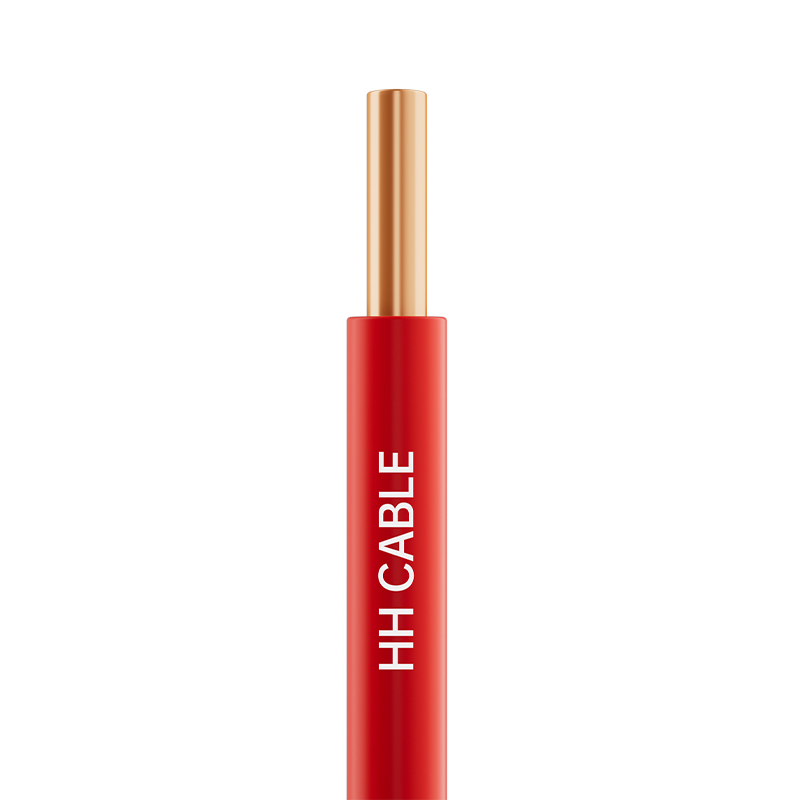 450-750V PVC Insulated Cables and Wires for General WiringThis product range includes BV, RV, and RVV types under GB/T5023 and JB/T8734, covering common voltage ratings. Useful when comparing raceway rules and conductor sizes mentioned in the article.View Product →
Depth Check: Conduit Fill, Derating, and Terminations
Once conduit is mandatory, three more rules decide how many conductors you can pull and how much current they can carry. The chart shows typical ampacity for THHN/THWN-2 copper at the two common column ratings.
14 AWG
12 AWG
10 AWG
8 AWG
6 AWG
75°C column (most terminations) 90°C column (THHN rating)
Conduit fill follows NEC Chapter 9: one conductor may occupy up to 53% of the interior cross-section, two conductors up to 31%, and three or more up to 40%. The percentage drops because pulling several conductors around bends builds friction and heat.
Derating matters when a single conduit carries more than three current-carrying conductors. NEC Table 310.15(C)(1) requires an 80% adjustment for four to six conductors, 70% for seven to nine, and 50% for ten to twenty. A conduit stuffed with ten wires can carry only half the ampacity listed on the insulation.
Finally, terminations usually cap the circuit. Most breakers and lugs are rated 75°C, so the wire's higher 90°C rating rarely increases the final ampacity; it gives thermal headroom inside the raceway, not a bigger breaker.
Where THHN and Conduit Runs Show Up Most
If you walk through any mid-size city, most of the conduit you see is carrying THHN or THWN-2 conductors. The split below reflects common installation patterns across project types.
- Commercial buildings (40%) - feeder and branch circuits in offices, retail, and mixed-use buildings where EMT or PVC conduit is the standard wiring method.
- Industrial plants (30%) - control panels, motor circuits, and plant distribution in wet, dusty, or corrosive areas where raceways protect the wires.
- Residential work (20%) - panel feeders, subpanels, and detached buildings where NM cable is not allowed or the run is exposed.
- Infrastructure (10%) - traffic signals, parking lot lighting, and utility-owned installations that require durable conductor protection.
The common thread is the need for a replaceable, inspectable, mechanically protected conductor pathway. That is exactly what a conduit plus THHN provides.
A Practical Installation Flow for THHN Runs
Work through these six steps in order, and the conduit question answers itself before you buy anything.
- Check the location. Underground, outdoor, and any conduit exposed to rain requires THWN-2 or dual-rated THHN/THWN-2. Plain THHN is dry-location only.
- Choose the conduit type. EMT for exposed indoor runs, PVC for underground and corrosive areas, RMC where mechanical abuse is likely, FMC for short flexible connections to motors.
- Size the conduit. Use NEC Chapter 9 tables and keep the total conductor cross-section below 40% when pulling three or more conductors.
- Pull carefully. Use a fish tape or tugger with cable lubricant; the nylon jacket reduces friction but a sharp bend can still cut through.
- Apply derating. If more than three current-carrying conductors share the raceway, multiply the ampacity by the adjustment factor before choosing the breaker.
- Verify termination limits. Land conductors on lugs rated for the calculated temperature, and torque them to the manufacturer's specification.
When the job allows a jacketed cable instead, you can skip the conduit but not the calculations. Building wires in a cable assembly still need correct sizing, support, and protection plates where nails or screws could reach them.
Maintenance, Inspection, and Code Compliance
A THHN installation can run for decades with very little attention, but the system is only as reliable as its weakest connection and its tightest conduit body.
- Torque every termination to the manufacturer's value. Loose connections cause more field failures than conductor aging.
- Keep junction boxes accessible and covered. A box hidden behind drywall is a violation and a serious future service problem.
- Inspect exposed conduits regularly for dents, corrosion, and UV damage, especially PVC fittings near equipment and in direct sunlight.
Getting the basics right the first time costs nothing extra, and it prevents the most avoidable electrical failures. The link between installation quality and fire risk is well documented: most electrical fires trace back to loose connections, undersized conductors, or mechanical damage, and all three are solved by a properly built raceway system. Reading how proper house wiring cable installation reduces fire risks shows why code details matter in ordinary homes as much as in industrial plants.
If a project evolves and a factory-assembled cable becomes a better fit than pulled THHN, the raceway rule changes but sizing and support requirements do not. Browse the full product range to see how conductor construction changes the installed system.
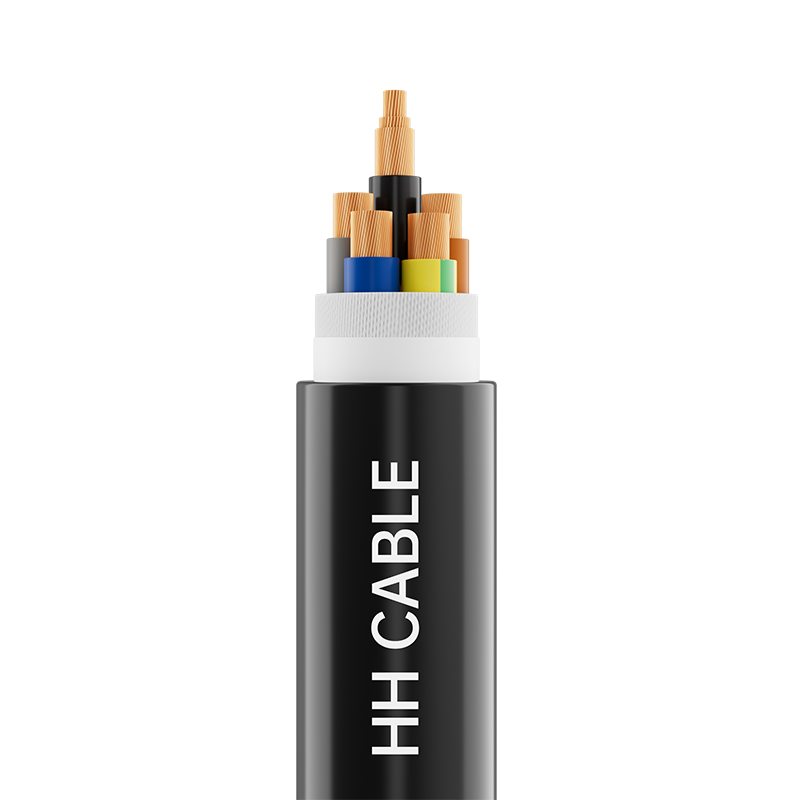 Eco-Friendly Fixed Wiring Cables for 450-750V ApplicationsThese low-smoke, halogen-free wires like WDZ-BYJ and WDZ-RYJ suit fixed installations where environmental performance matters. Relevant when considering factory-assembled alternatives to pulled THHN.View Product →
Remember the rule this way: THHN as a single conductor belongs in a raceway. Conduit is not a decoration; it is the jacket the wire was never given, and it is what keeps the installation safe, serviceable, and code compliant.
PREV:EPR Insulation Explained: Properties, Ratings, and Cable Selection Guide
NEXT:Copper vs Aluminum Wire: Conductivity, Cost, and How to Choose for Your Project
NEXT:Copper vs Aluminum Wire: Conductivity, Cost, and How to Choose for Your Project
Interested in cooperation or have questions?
Featured Products
Comprehensive Cable Solutions


Ready To Customise
Your Cable Products?
Your Cable Products?

Customized Cable Solutions, Bulk Wire Supplier in China. Relying on genuine core quality to build a renowned brand, striving to become a benchmark for advanced
cable standards.
Product Categories
Quick Links
Contact Us
-
Email: [email protected]

-
Mobile: +86-0510-87296815

-
Fax: +86-0510-87295158

-
No. 1, Fengyi Jinfeng Road, Guanlin Town, Yixing City, Jiangsu Province, China

Copyright © Wuxi Henghui Cable Co., Ltd. All Rights Reserved. Custom Cable Manufacturers Electrical Cables Factory
