


 English
 中文简体
中文简体 русский
Copper vs Aluminum Wire: Conductivity, Cost, and How to Choose for Your Project
Copper vs Aluminum Wire: Conductivity, Cost, and How to Choose for Your Project
Copper vs Aluminum Wire: Conductivity, Cost, and How to Choose for Your Project
Copper vs Aluminum Wire: Conductivity, Cost, and How to Choose for Your Project
Copper vs Aluminum Wire: Conductivity, Cost, and How to Choose for Your Project
Copper vs Aluminum Wire: Conductivity, Cost, and How to Choose for Your Project
Copper vs Aluminum Wire: Conductivity, Cost, and How to Choose for Your Project
Copper vs Aluminum Wire: Conductivity, Cost, and How to Choose for Your Project
Copper vs Aluminum Wire: Conductivity, Cost, and How to Choose for Your Project
Copper vs Aluminum Wire: Conductivity, Cost, and How to Choose for Your Project
Copper vs Aluminum Wire: Conductivity, Cost, and How to Choose for Your Project
Copper vs Aluminum Wire: Conductivity, Cost, and How to Choose for Your Project
Copper vs Aluminum Wire: Conductivity, Cost, and How to Choose for Your Project
Copper vs Aluminum Wire: Conductivity, Cost, and How to Choose for Your Project
Copper vs Aluminum Wire: Conductivity, Cost, and How to Choose for Your Project
Copper vs Aluminum Wire: Conductivity, Cost, and How to Choose for Your Project

Industry News
Home / News / Industry News / Copper vs Aluminum Wire: Conductivity, Cost, and How to Choose for Your Project
Product Category
NEW Category
Contact us
 +86-0510-87296815
Copper vs Aluminum Wire: Conductivity, Cost, and How to Choose for Your Project
You are reviewing two bids for a 200-amp workshop feeder. The copper conductors cost roughly 1.6 times more than the aluminum option, but the aluminum version requires a larger conduit and lugs rated for aluminum terminations. Which bid do you approve?
Use copper when conduit space is fixed, terminations are standard, or voltage drop must stay minimal. Use aluminum for long overhead runs, large service feeders, and budget-sensitive projects where conductor weight affects structure. The five engineering factors behind that rule of thumb are covered below.
Core takeaway: copper delivers 100% IACS conductivity, higher mechanical strength, and more stable connections. Aluminum weighs about 70% less than copper on a volume basis, costs significantly less per meter, and performs reliably in overhead and large-feeder duty when sized up and terminated correctly. Neither metal is universally better; the right choice depends on ampacity, run length, termination hardware, and code requirements.
Content
How Conductor Physics Changes the Spec
Four physical properties drive every practical difference between copper and aluminum: electrical conductivity, density, thermal expansion, and oxide behavior.
Conductivity and Sizing
Copper is the reference at 100% IACS, about 61.0 MS/m. Aluminum sits near 61% IACS, about 35.4 MS/m. To carry the same current, aluminum needs a cross-section roughly 1.26 times larger, which is why aluminum feeders typically step up one to two AWG sizes versus copper.
Weight and Pulling
Aluminum density is 2.70 g/cm³ versus 8.96 g/cm³ for copper, so an equivalent-ampacity aluminum conductor weighs about half as much. This lowers sag on overhead spans, eases pulling tension in ducts, and reduces structural loads on towers and bus supports.
Thermal Expansion and Oxide
Aluminum expands about 23 × 10^-6 per °C versus 17 × 10^-6 for copper, so it moves more under cyclic load. Aluminum also forms a hard, high-resistance oxide within seconds of air exposure. Reliable connections require brushing, anti-oxidant compound, aluminum-rated lugs, and torque control, not just a heavier wrench pull.
Side-by-Side Material Comparison
The table below gives typical values for commercial-grade electrical conductors. Confirm actual figures with the mill certificate supplied by your cable manufacturer.
Table 1 — Typical properties for electrical grade copper and aluminum conductor materials.
The Hidden Spec: Equivalent Ampacity and Voltage Drop
Ampacity tables answer how much current a conductor can carry; they do not directly answer which aluminum size replaces a copper size. At the 75°C column, 1/0 AWG copper is rated near 150 A. The equivalent aluminum options are 2/0 AWG at about 145 A and 3/0 AWG at about 170 A, depending on ambient temperature and termination temperature limits.
150 A
1/0 AWG Cu120 A
1/0 AWG Al145 A
2/0 AWG Al170 A
3/0 AWG AlVoltage drop follows the same relationship. Because aluminum has higher resistance at any given gauge, a 60-meter feeder carrying 150 A sees roughly 1.5 times the voltage drop of the same-size copper conductor. Upsizing aluminum reduces the drop but adds conduit space, pulling effort, and lug cost — the tradeoff hidden inside every first-cost comparison.
Where Each Conductor Dominates
Material share across end-use sectors shows a clear pattern: aluminum leads long, weight-sensitive, and cost-driven installations; copper leads dense, reliability-sensitive, and space-limited installations.
- Utility overhead (35%) — ACSR and bare aluminum conductors.
- Building wiring (25%) — copper branch circuits and services.
- Industrial power and control (20%) — copper bus and instrumentation.
- Renewables (12%) — copper and aluminum for solar and wind.
- Rail, marine, data center (8%) — copper-dominant.
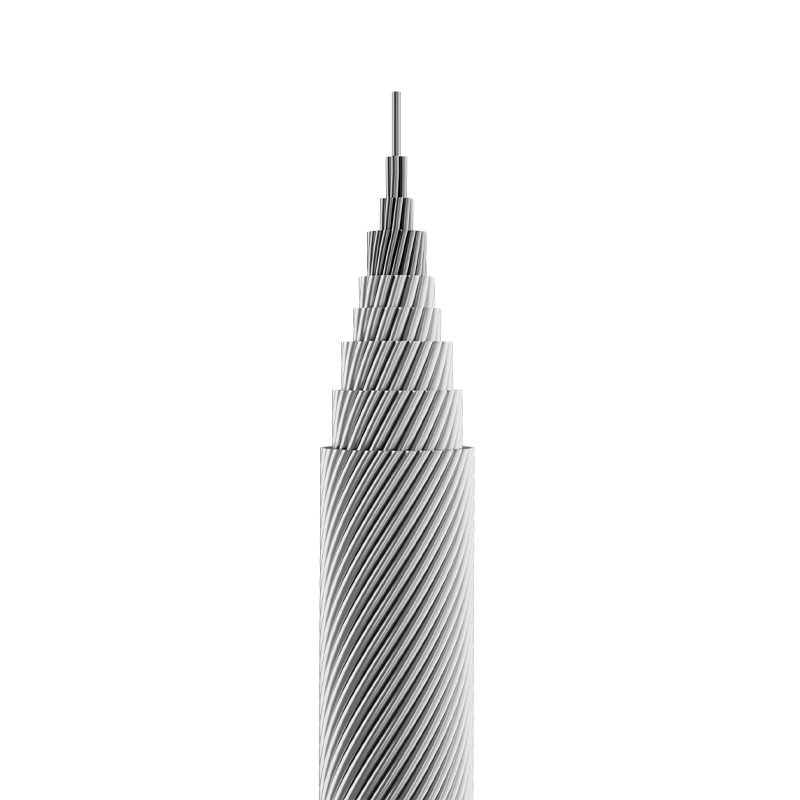
Utility overhead lines use steel-reinforced aluminum because the weight saving translates into fewer poles and smaller towers. Inside buildings and control cabinets, copper's higher ampacity per cross-section wins because conduit space and termination density are the limiting constraints. For distribution feeders where aluminum is selected, conductors such as steel-reinforced aluminum strand offer the tensile strength needed for long spans.
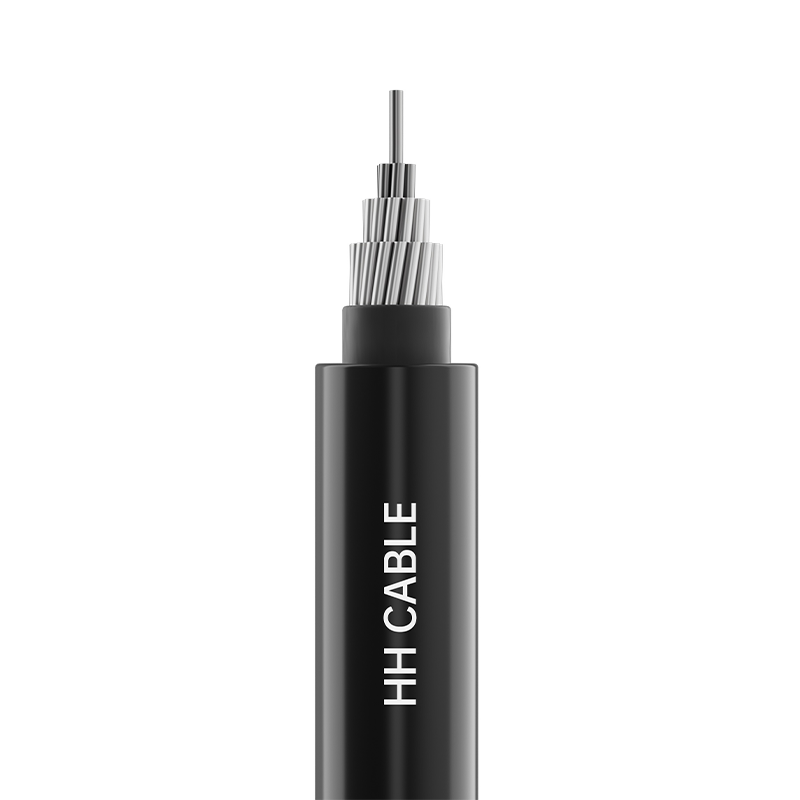 Steel-Reinforced Aluminum Overhead Insulated Cable for 20kV and BelowThis overhead insulated cable uses steel-reinforced aluminum or aluminum alloy cores, balancing tensile strength with weight savings for utility distribution lines. It suits projects where long spans and reduced pole loading matter, with specifications ranging from 10/2 to 400/95 mm².View Product →
ROI and a Practical Four-Step Selection Process
Return on investment depends on the installed system cost, not the conductor price per meter. Use these four steps when evaluating copper versus aluminum for an actual project.
Step 1 — Define the Electrical Duty
Record design current, voltage, ambient temperature, and maximum voltage drop over the full route. Calculate the minimum copper and aluminum sizes separately using the applicable ampacity tables.
Step 2 — Inspect Terminations
Check whether panelboards, disconnect switches, lugs, and connected devices are rated for copper, aluminum, or both. If the existing hardware is copper-rated, an aluminum feeder will require new lugs approved for aluminum.
Step 3 — Price the Installed System
Aluminum costs less, but the larger gauge can increase conduit size, pulling compound, listed lugs, anti-oxidant material, and labor. Compare the complete installed assembly, not just the price per meter.
Step 4 — Plan Lifecycle Cost
Aluminum connections need re-torquing and inspection after thermal cycling, especially under heavy cyclic loads. Copper extends inspection intervals but carries a higher first cost and resale value.
On a typical 400 A, 150-meter feeder, aluminum can cut conductor material cost by roughly half. After upsizing conduit and adding dual-rated terminations, the net installed saving usually settles at 25–35% — meaningful, but not worth the risk in systems with poor maintenance access or aggressive corrosive exposure.
For medium-voltage distribution feeders with long underground runs, cross-linked polyethylene insulated cable provides the thermal and mechanical margin needed for both copper and aluminum conductor options.
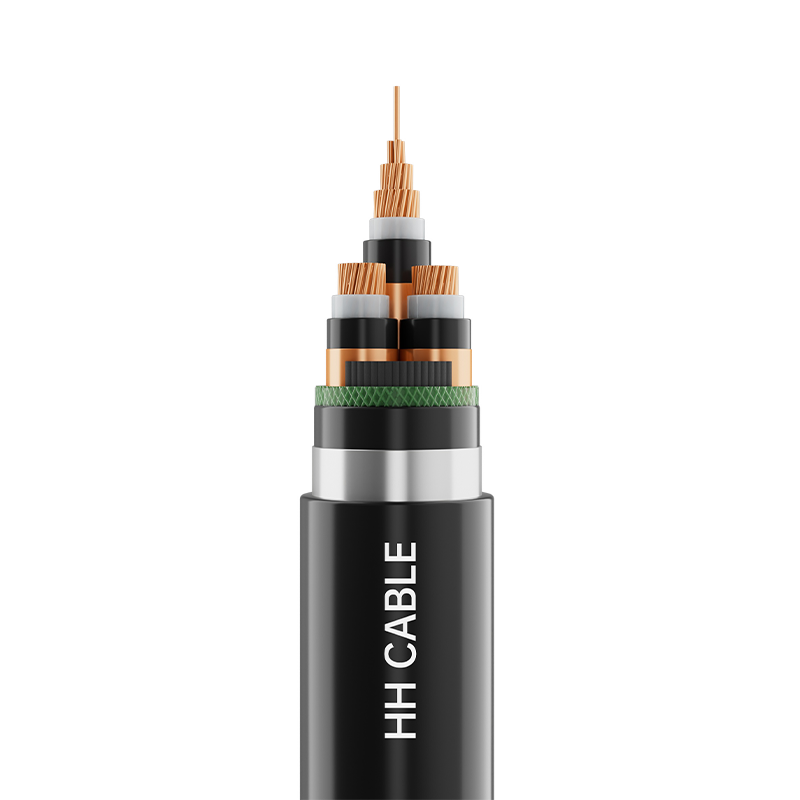 6-35kV XLPE Insulated Power Cable with Copper or Aluminum ConductorsThis medium-voltage power cable features cross-linked polyethylene insulation and round compacted conductors available in copper, aluminum, or aluminum alloy. It provides thermal and mechanical margin for underground distribution feeders, making it a practical choice when comparing conductor materials.View Product →
Maintenance and Compliance Safeguards
Most aluminum wiring failures are connection failures, not conductor failures. These practices keep aluminum terminations stable and compliant.
- Brush the aluminum surface and apply a listed anti-oxidant compound immediately before termination.
- Torque lugs to the manufacturer's specification for aluminum, and re-torque after the first year of thermal cycling.
- Use CO/ALR rated devices for aluminum branch circuits; use compression lugs explicitly rated for aluminum on larger conductors.
- Never connect copper and aluminum in the same lug unless the connector is listed for dissimilar metal joints.
- Check local electrical codes before a retrofit; some jurisdictions restrict aluminum in 15 A and 20 A branch circuits.
Correctly installed and terminated conductors reduce fire risk in residential and commercial buildings, a point covered in more detail in our notes on house wiring installation and fire risk reduction.
For high-voltage feeders, the conductor material also changes cable diameter, pulling tension, splice design, and accessory compatibility. A cable manufacturer should document conductor material, class, and test results. For 66/110 kV circuits, cross-linked polyethylene insulated power cables are engineered around the mechanical and electrical characteristics of the chosen conductor.
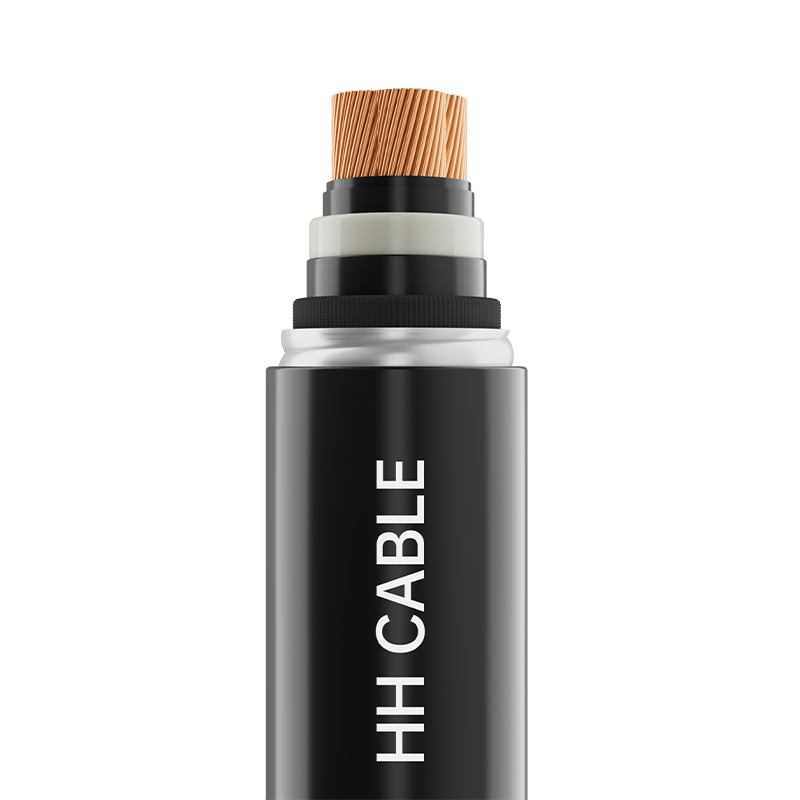 66-110kV XLPE Insulated Power Cable for High-Voltage FeedersEngineered for 66/110 kV circuits, this cross-linked polyethylene insulated cable accommodates round compacted or split copper or aluminum conductors. Its design accounts for mechanical and electrical characteristics that affect cable diameter, pulling tension, and accessory compatibility at high voltage.View Product →
If you are unsure whether copper or aluminum fits your voltage level, route length, and termination environment, send the specification to our engineering team for a conductor construction recommendation.
PREV:Does THHN Wire Need to Be in Conduit? NEC Rules, Exceptions & Safe Installation
NEXT:AWG Cable Meaning: How the American Wire Gauge Standard Affects Your Cable Choice
NEXT:AWG Cable Meaning: How the American Wire Gauge Standard Affects Your Cable Choice
Interested in cooperation or have questions?
Featured Products
Comprehensive Cable Solutions


Ready To Customise
Your Cable Products?
Your Cable Products?

Customized Cable Solutions, Bulk Wire Supplier in China. Relying on genuine core quality to build a renowned brand, striving to become a benchmark for advanced
cable standards.
Product Categories
Quick Links
Contact Us
-
Email: [email protected]

-
Mobile: +86-0510-87296815

-
Fax: +86-0510-87295158

-
No. 1, Fengyi Jinfeng Road, Guanlin Town, Yixing City, Jiangsu Province, China

Copyright © Wuxi Henghui Cable Co., Ltd. All Rights Reserved. Custom Cable Manufacturers Electrical Cables Factory
