


 English
 中文简体
中文简体 русский
TUV Solar Cable: Certified Photovoltaic Wire 1.5kV DC
TUV Solar Cable: Certified Photovoltaic Wire 1.5kV DC
TUV Solar Cable: Certified Photovoltaic Wire 1.5kV DC
TUV Solar Cable: Certified Photovoltaic Wire 1.5kV DC
TUV Solar Cable: Certified Photovoltaic Wire 1.5kV DC
TUV Solar Cable: Certified Photovoltaic Wire 1.5kV DC
TUV Solar Cable: Certified Photovoltaic Wire 1.5kV DC
TUV Solar Cable: Certified Photovoltaic Wire 1.5kV DC
TUV Solar Cable: Certified Photovoltaic Wire 1.5kV DC
TUV Solar Cable: Certified Photovoltaic Wire 1.5kV DC
TUV Solar Cable: Certified Photovoltaic Wire 1.5kV DC
TUV Solar Cable: Certified Photovoltaic Wire 1.5kV DC
TUV Solar Cable: Certified Photovoltaic Wire 1.5kV DC
TUV Solar Cable: Certified Photovoltaic Wire 1.5kV DC
TUV Solar Cable: Certified Photovoltaic Wire 1.5kV DC
TUV Solar Cable: Certified Photovoltaic Wire 1.5kV DC

Industry News
Product Category
NEW Category
Contact us
 +86-0510-87296815
TUV Solar Cable: Certified Photovoltaic Wire 1.5kV DC
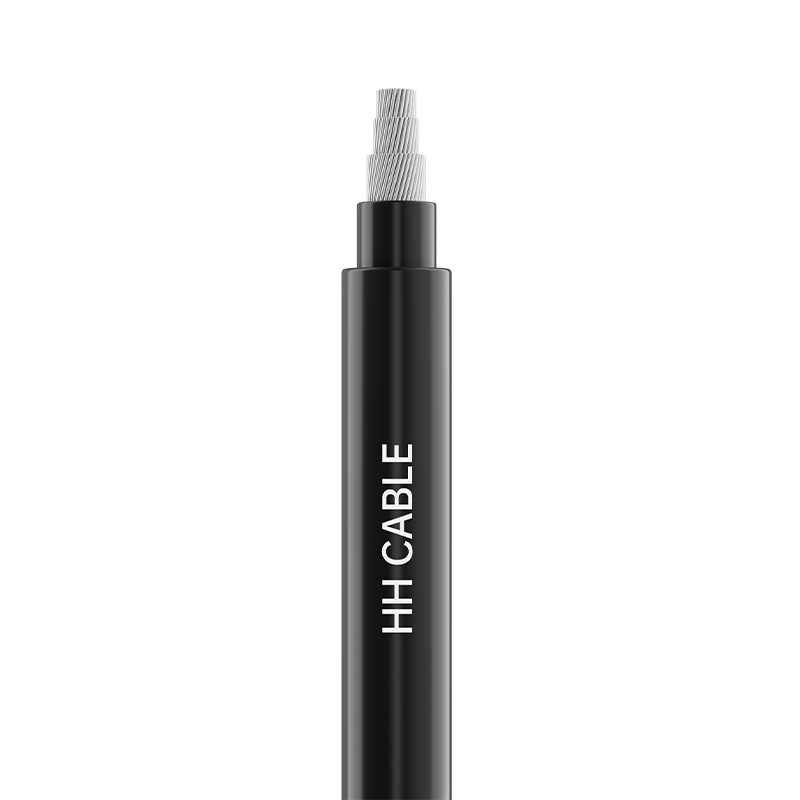
A TUV solar cable is the globally recognized benchmark for photovoltaic system wiring. Certified by TÜV Rheinland or TÜV SÜD to the EN 50618 standard, these cables combine tinned copper conductors, cross-linked polyolefin insulation, and a 1.5 kV DC voltage rating to deliver exceptional weather, UV, and fire resistance for decades of outdoor service. They are the mandatory choice for the DC side of solar arrays, ensuring safe, low-loss energy transmission and compliance with international installation codes.
Content
- 1 What Makes a Cable TUV Certified for Solar Use
- 2 Construction and Material Standards of a TUV Solar Cable
- 3 Electrical Performance That Protects the PV Investment
- 4 Comparing TUV Solar Cable to Ordinary Building Wire
- 5 Choosing the Right Conductor Size and Color
- 6 Installation and Crimping Best Practices
What Makes a Cable TUV Certified for Solar Use
TUV certification is not a generic label—it means the cable has passed a rigorous testing protocol specifically for photovoltaic installations. The relevant harmonized standard is EN 50618:2014 (replacing the earlier TÜV 2 PfG 1169). A cable bearing the TUV mark has been verified for long-term resistance against ozone, UV radiation (according to EN 50396), and ammonia, as well as for low smoke, zero halogen emission, and flame retardancy per IEC 60332-1.
Additionally, TUV-certified solar cables are rated for a nominal DC voltage of 1.5 kV, supporting modern high-string voltage systems, with a maximum allowable DC voltage of 1.8 kV for ungrounded arrays. This certification guarantees that the insulation system will not break down under the partial discharge stress common in long series string configurations.
Construction and Material Standards of a TUV Solar Cable
The durability of a TUV solar cable stems from its materials and engineering. A typical single-core cable consists of:
- Conductor: Flexible, tinned copper strands (class 5 flexibility), offering excellent conductivity and corrosion protection. Common cross-sections include 1.5 mm², 2.5 mm², 4 mm², 6 mm², and 10 mm².
- Insulation: Electron-beam cross-linked polyolefin (XLPO) that withstands temperatures from -40°C to +120°C continuously, with a short-circuit temperature tolerance up to 250°C for 5 seconds.
- Outer sheath: Also cross-linked polyolefin, UV-stabilized for 25+ years of direct sunlight exposure without cracking. It is halogen-free, with acid gas emission below 0.5% during combustion.
This double-layer XLPO construction ensures both mechanical toughness and high dielectric strength, typically ≥6.5 kV AC for 5 minutes as a type test.
Electrical Performance That Protects the PV Investment
A TUV-certified solar cable minimizes power loss through careful conductor sizing and low resistivity. For example, a 4 mm² cable at standard operating temperature has a voltage drop of roughly 2.5 mV per ampere per meter. Over a 50-meter string with 10 A current, this translates to only 1.25 V loss—keeping array efficiency high. Insulation resistance remains above 1,000 MΩ·km at 20°C, preventing leakage currents that could trip inverters or degrade over time.
Comparing TUV Solar Cable to Ordinary Building Wire
Using general-purpose PVC building wire (such as H07V-K) on a solar array is a known failure point. The table below highlights the decisive advantages of a TUV solar cable.
| Property | TUV Solar Cable (EN 50618) | Standard PVC Wire |
|---|---|---|
| Max. DC voltage rating | 1.5–1.8 kV | 0.6/1 kV |
| Temperature range | -40°C to +120°C | -5°C to +70°C |
| UV/Ozone resistance | Excellent, 25+ years | Poor, cracks within 1–3 years outdoors |
| Halogen content | Zero halogen, low smoke | High, emits toxic HCl gas |
| Expected lifetime outdoors | 25–30 years | 5 years or less |
The dramatic difference in UV stability and temperature tolerance alone makes TUV solar cable the only responsible choice for exposed array wiring.
Choosing the Right Conductor Size and Color
Conductor cross-section should be selected based on string current and length to keep voltage drop under 1–2%. Typical industry practice:
- 4 mm² is the most common for module interconnection and short home runs with currents up to 30 A.
- 6 mm² is preferred for longer DC runs or when future system expansion is planned.
- 10 mm² and above for large commercial installations or when combining multiple strings before the inverter.
For easy polarity identification and compliance with IEC 60445, TUV solar cables are typically black for negative (-) and red for positive (+), though blue/grey combinations are also used. Always check local code requirements.
Installation and Crimping Best Practices
TUV solar cables require compatible MC4 or equivalent connector systems. Proper assembly is crucial for long-term reliability.
- Always strip the insulation to the exact length specified by the connector manufacturer—typically 6–8 mm.
- Use a dedicated solar connector crimping tool with the correct die for the specific pin size. A cold-weld crimp ensures a gas-tight connection with a pull-out force exceeding 310 N for 4 mm².
- Seat the crimped contact fully until it clicks into the housing. The connector's IP68 rating is only achieved when the cable gland is securely tightened.
- Avoid coiling excess cable tightly; maintain a minimum bending radius of 5× the cable outer diameter to prevent stress on the insulation at high temperatures.
When routing in cable trays, keep TUV solar cables separated from AC power lines by at least 100 mm and use UV-resistant nylon cable ties to avoid damaging the sheath over time.
Specifying a genuine TUV solar cable for every DC connection in a photovoltaic system is a small upfront investment that pays back through decades of maintenance-free, safe operation. The TUV mark guarantees that the cable will withstand the electrical, thermal, and environmental extremes of a solar installation, protecting both the energy yield and the installation's integrity.
PREV:Cross Linked Polyethylene XLPE: Ultimate Cable Guide
NEXT: Instrumentation Cable Types: Shielded, Armoured & Fire-Safe
NEXT: Instrumentation Cable Types: Shielded, Armoured & Fire-Safe
Interested in cooperation or have questions?
Featured Products
Comprehensive Cable Solutions


Ready To Customise
Your Cable Products?
Your Cable Products?

Customized Cable Solutions, Bulk Wire Supplier in China. Relying on genuine core quality to build a renowned brand, striving to become a benchmark for advanced
cable standards.
Product Categories
Quick Links
Contact Us
-
Email: [email protected]

-
Mobile: +86-0510-87296815

-
Fax: +86-0510-87295158

-
No. 1, Fengyi Jinfeng Road, Guanlin Town, Yixing City, Jiangsu Province, China

Copyright © Wuxi Henghui Cable Co., Ltd. All Rights Reserved. Custom Cable Manufacturers Electrical Cables Factory
