


 English
 中文简体
中文简体 русский
Instrumentation Cable Types: Shielded, Armoured & Fire-Safe
Instrumentation Cable Types: Shielded, Armoured & Fire-Safe
Instrumentation Cable Types: Shielded, Armoured & Fire-Safe
Instrumentation Cable Types: Shielded, Armoured & Fire-Safe
Instrumentation Cable Types: Shielded, Armoured & Fire-Safe
Instrumentation Cable Types: Shielded, Armoured & Fire-Safe
Instrumentation Cable Types: Shielded, Armoured & Fire-Safe
Instrumentation Cable Types: Shielded, Armoured & Fire-Safe
Instrumentation Cable Types: Shielded, Armoured & Fire-Safe
Instrumentation Cable Types: Shielded, Armoured & Fire-Safe
Instrumentation Cable Types: Shielded, Armoured & Fire-Safe
Instrumentation Cable Types: Shielded, Armoured & Fire-Safe
Instrumentation Cable Types: Shielded, Armoured & Fire-Safe
Instrumentation Cable Types: Shielded, Armoured & Fire-Safe
Instrumentation Cable Types: Shielded, Armoured & Fire-Safe
Instrumentation Cable Types: Shielded, Armoured & Fire-Safe

Industry News
Product Category
NEW Category
Contact us
 +86-0510-87296815
Instrumentation Cable Types: Shielded, Armoured & Fire-Safe
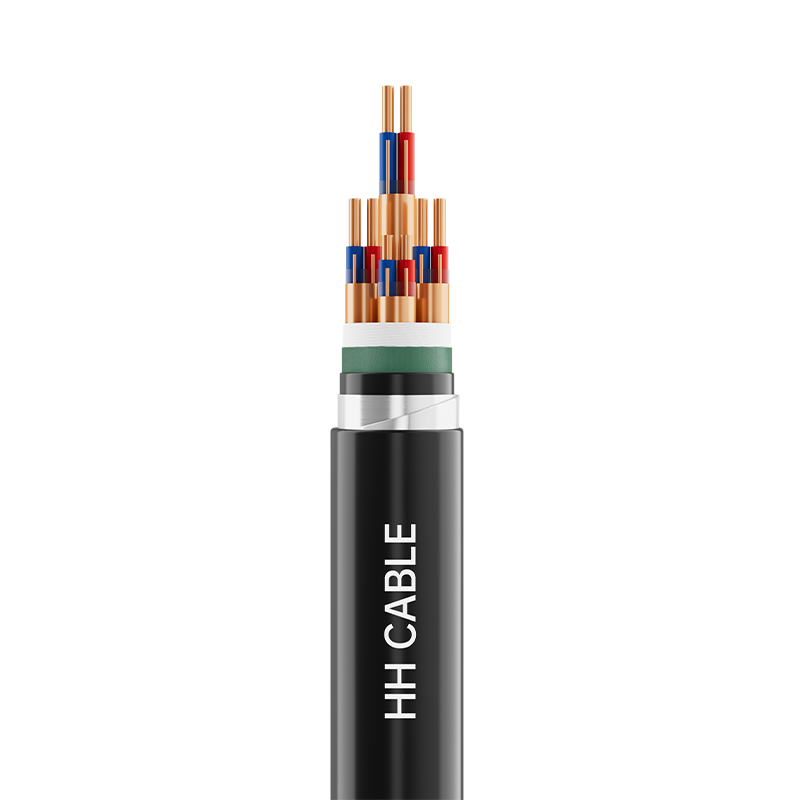
Selecting the right instrumentation cable begins with understanding the core types defined by shielding and protection. The primary varieties are overall shielded, individually and overall shielded, armoured, and fire-resistant cables, each suited to different signal integrity and environmental demands. Matching the cable construction to the specific electrical noise environment, mechanical hazards, and safety requirements ensures accurate, uninterrupted data transmission in industrial plants, refineries, and process control systems.
Content
Shielding Configurations That Guard Signal Quality
Shielding is the defining feature that separates instrumentation cable types. It protects low-voltage analogue signals (typically 4–20 mA) and digital pulses from electromagnetic interference (EMI) and radio frequency interference (RFI). The shield type directly determines the cable's noise rejection capability.
Overall Shielded Cables
A single aluminium/polyester tape with a tinned copper drain wire is wrapped around all twisted pairs or triads. This construction provides 100% coverage against high-frequency interference and is cost-effective for environments with moderate EMI, such as standard control rooms. It is sufficient for signals where cross-talk between adjacent pairs is not critical.
Individually and Overall Shielded Cables
Each pair or triad has its own foil shield and drain wire, with an additional overall shield encasing all of them. This dual-layer approach eliminates cross-talk between circuits and blocks external EMI. It is essential for mixed-signal cables carrying both analogue and digital signals. A typical installation for a multicore cable with 12 pairs can maintain a cross-talk attenuation of ≥60 dB at 1 MHz, preserving signal integrity across long cable trays.
Mechanical Protection: Armoured Instrumentation Cables
When cables must be buried directly or run through cable trays in harsh industrial settings, mechanical strength becomes paramount. Armoured types incorporate a layer of galvanized steel wire braid (SWB) or steel wire armour (SWA) beneath the outer sheath. This armour withstands crushing forces exceeding 4,000 N/100 mm and protects against rodent attack and accidental impacts. Armoured cables are mandatory in petrochemical plants and outdoor installations where physical damage is likely, while the shield configuration inside the armour remains the same as in unarmoured types.
Fire Performance and Safety-Critical Types
In tunnels, emergency shutdown systems, and public buildings, instrumentation cables must maintain circuit integrity during a fire and emit minimal smoke and toxic gases. Two categories address these needs:
- Fire-resistant cables: Designed to continue functioning for a defined period under direct flame. Tested to standards such as IEC 60331 or BS 6387 CWZ, these can sustain operation for 30, 60, or 120 minutes at temperatures up to 950°C. Silicone rubber or mica-tape insulation achieves this integrity.
- Low-smoke zero-halogen (LSZH) cables: Emit less than 0.5% HCl when burned and limit smoke density to a minimum light transmittance of 60% per IEC 61034. Essential for enclosed spaces where toxic fumes would endanger personnel.
Many fire-resistant instrumentation cables also use LSZH sheaths, combining both life-safety properties.
Matching Cable Type to Signal Characteristics
The signal type and transmission distance guide the shielding choice. A practical overview of common pairings simplifies selection.
| Signal / Application | Recommended Shield Type | Additional Protection |
|---|---|---|
| 4–20 mA analogue loops (single pair) | Overall foil shield | Armour if buried |
| Thermocouple extension | Individual and overall shield | Compensating alloy conductors |
| RS-485 / Modbus digital bus | Overall braid + foil, characteristic impedance 120 Ω | LSZH for building plenums |
| Vibration sensor / accelerometer | Individual and overall shield, high-flex stranding | Armour for on-machine routing |
| Emergency shutdown (ESD) system | Fire-resistant, overall shield | LSZH sheath mandatory |
Key Specification Parameters Beyond the Type
Having identified the correct shielding and armour category, several additional parameters ensure optimal performance and compliance.
- Voltage rating: Standard instrumentation cables are rated for 300/500 V, sufficient for most PLC and DCS inputs. Higher ratings are available for power-limited tray cables.
- Conductor size: Typically 1.0 mm² to 2.5 mm² stranded copper. Larger sizes minimize voltage drop over runs exceeding 1,000 metres.
- Insulation material: PVC offers good dielectric strength and flexibility; cross-linked polyethylene (XLPE) provides higher temperature tolerance up to 90°C continuous.
- Twisting and lay length: Pairs should have a twist lay of 25–50 mm to cancel magnetic interference effectively, with adjacent pairs having different lay lengths to reduce cross-talk.
Installation Best Practices by Cable Type
Even the best-specified cable can underperform if installed incorrectly. Ground the drain wire at only one end for low-frequency analogue signals (to avoid ground loops), but for high-frequency digital signals, a 360° shield termination at both ends can be necessary. Armoured cables must have the armour earthed at the supply end. Fire-resistant cables require appropriate fire-rated glanding and support systems to maintain circuit integrity. Segregating instrumentation cables from power cables by a minimum distance of 200 mm reduces inductive coupling, preserving the clean signal that the shielding is designed to protect.
Ultimately, the choice among instrumentation cable types pivots on a clear assessment of electromagnetic environment, mechanical risk, and fire safety demands. Selecting overall shielded cable for quiet zones, individual-plus-overall for dense mixed-signal trays, armoured for outdoor or buried paths, and fire-resistant LSZH variants for life-safety circuits ensures reliable, long-term process signal integrity.
PREV:TUV Solar Cable: Certified Photovoltaic Wire 1.5kV DC
NEXT:Overhead Electrical Cable: Types, Selection & Installation
NEXT:Overhead Electrical Cable: Types, Selection & Installation
Interested in cooperation or have questions?
Featured Products
Comprehensive Cable Solutions


Ready To Customise
Your Cable Products?
Your Cable Products?

Customized Cable Solutions, Bulk Wire Supplier in China. Relying on genuine core quality to build a renowned brand, striving to become a benchmark for advanced
cable standards.
Product Categories
Quick Links
Contact Us
-
Email: [email protected]

-
Mobile: +86-0510-87296815

-
Fax: +86-0510-87295158

-
No. 1, Fengyi Jinfeng Road, Guanlin Town, Yixing City, Jiangsu Province, China

Copyright © Wuxi Henghui Cable Co., Ltd. All Rights Reserved. Custom Cable Manufacturers Electrical Cables Factory
