


 English
 中文简体
中文简体 русский
Control Cables & Low Voltage Power Cable Guide
Control Cables & Low Voltage Power Cable Guide
Control Cables & Low Voltage Power Cable Guide
Control Cables & Low Voltage Power Cable Guide
Control Cables & Low Voltage Power Cable Guide
Control Cables & Low Voltage Power Cable Guide
Control Cables & Low Voltage Power Cable Guide
Control Cables & Low Voltage Power Cable Guide
Control Cables & Low Voltage Power Cable Guide
Control Cables & Low Voltage Power Cable Guide
Control Cables & Low Voltage Power Cable Guide
Control Cables & Low Voltage Power Cable Guide
Control Cables & Low Voltage Power Cable Guide
Control Cables & Low Voltage Power Cable Guide
Control Cables & Low Voltage Power Cable Guide
Control Cables & Low Voltage Power Cable Guide

Industry News
Product Category
NEW Category
Contact us
 +86-0510-87296815
Control Cables & Low Voltage Power Cable Guide
Content
- 1 What Are Control Cables and Why Do They Matter in Industrial Systems
- 2 Key Construction Elements of Control Cables
- 3 How to Choose the Right Control Cable for Your Application
- 4 Understanding Low Voltage Power Cables: Types and Applications
- 5 Control Cables vs. Power Cables: Knowing the Difference Prevents Costly Mistakes
- 6 Standards and Certifications That Ensure Cable Quality
What Are Control Cables and Why Do They Matter in Industrial Systems
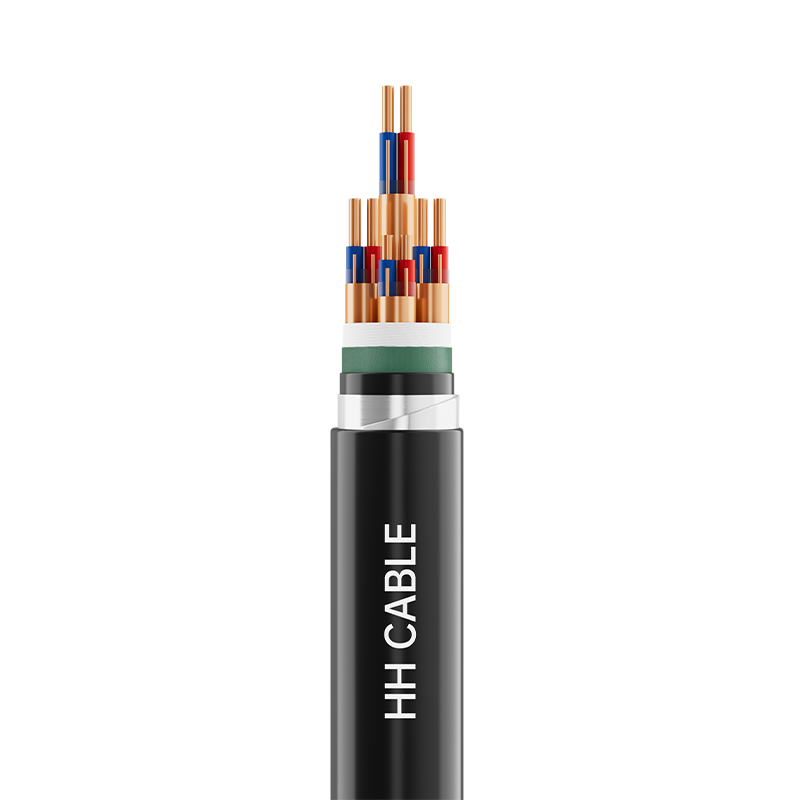
Control cables are a category of electrical cables specifically designed to transmit signals, commands, and low-level electrical current between control panels, instruments, and field devices. Unlike power cables that carry high-voltage electricity to drive motors and equipment, control cables serve a precision function — ensuring that sensors, switches, relays, and automation controllers communicate accurately and without interference.
In modern industrial environments, control cables are the backbone of process automation. From manufacturing assembly lines and water treatment facilities to power substations and chemical plants, these cables ensure that control signals reach their destination with minimal loss or distortion. A poorly selected control cable can introduce signal noise, increase system downtime, or even cause safety failures in critical infrastructure.
Control cables are typically rated for voltages up to 450/750V or 0.6/1kV. They are constructed with multiple conductors — often ranging from 2 to 61 cores — and may include shielding layers to protect against electromagnetic interference (EMI). The choice of insulation material, conductor count, shielding type, and outer jacket directly affects how the cable performs in a specific environment.
Key Construction Elements of Control Cables
Understanding the internal structure of a control cable helps engineers and procurement teams make better decisions. Each layer in the cable construction serves a specific protective or functional purpose.
Conductor Material and Stranding
Most control cables use annealed copper conductors due to copper's excellent electrical conductivity and flexibility. Conductors may be solid or stranded; stranded conductors offer better flexibility and are preferred in applications with frequent movement or vibration. Cross-sectional areas typically range from 0.5 mm² to 10 mm², with 1.5 mm² and 2.5 mm² being the most common for general control wiring.
Insulation and Jacket Materials
PVC (polyvinyl chloride) is the standard insulation material for general-purpose control cables, offering good dielectric properties and flame resistance at a low cost. For high-temperature environments or outdoor installations, XLPE (cross-linked polyethylene) insulation is preferred due to its superior thermal stability and moisture resistance. The outer jacket is equally important — PVC jackets provide basic protection, while materials such as LSZH (low smoke zero halogen) are mandated in confined spaces where toxic fume emission must be minimized.
Shielding Options
Shielding is one of the most critical factors in control cable selection. An unshielded cable may be sufficient for simple on/off control in clean environments, but most instrumentation and automation applications require shielded cables to prevent signal degradation. The three main shielding options are:
- Foil shield (aluminum/polyester): Provides 100% coverage against high-frequency interference; lightweight and cost-effective.
- Braided shield (tinned copper): Offers mechanical strength and lower resistance; ideal for environments with physical stress or lower-frequency EMI.
- Combination shield (foil + braid): Delivers the highest level of shielding effectiveness across a wide frequency range; used in highly sensitive instrumentation systems.
How to Choose the Right Control Cable for Your Application
Selecting a control cable requires a systematic evaluation of the operating environment, electrical requirements, and installation conditions. The following factors should guide the decision-making process:
| Selection Factor | Key Consideration | Recommended Specification |
|---|---|---|
| Operating temperature | Ambient heat near equipment or outdoors | XLPE insulation for ≥90°C environments |
| Signal sensitivity | Analog vs. digital control signal | Shielded cable for analog; unshielded may suit digital |
| Installation method | Direct burial, cable tray, conduit | Armored cable for direct burial or mechanical risk |
| Chemical exposure | Oils, solvents, or corrosive atmospheres | Oil-resistant or halogen-free outer jacket |
| Conductor count | Number of control circuits required | Match to actual circuit count; avoid over-specification |
In hazardous locations — such as mines, offshore platforms, or areas with explosive atmospheres — cables must meet additional certifications, including IEC 60079 for explosion-proof environments or IEC 60332 for flame retardancy. Always verify that the cable standard matches the local regulatory requirements of your project site.
Understanding Low Voltage Power Cables: Types and Applications
A low voltage power cable is defined as a cable rated for voltages up to 1kV (1000V). These cables are the most widely used category in electrical distribution systems, connecting transformers, switchgear, motors, and end-use equipment across residential, commercial, and industrial sectors. Choosing the right low voltage power cable requires understanding the differences between construction types and their intended use cases.
The two dominant insulation technologies in modern low voltage power cables are PVC and XLPE. PVC-insulated cables are cost-effective and suitable for standard indoor applications, while XLPE-insulated cables offer higher current-carrying capacity, better thermal endurance, and longer service life — making them the preferred choice for industrial and outdoor power distribution.
Armoring is another important construction variable. Steel wire armored (SWA) and steel tape armored (STA) cables are used in direct burial or environments with mechanical stress risks. Aluminum wire armored (AWA) variants offer lighter weight and are used when weight-saving matters, such as in long cable runs or offshore applications.
As a specialized low voltage power cable factory, manufacturers serving industrial clients must ensure that every cable batch passes voltage withstand testing, conductor resistance checks, and insulation resistance verification in accordance with IEC 60502-1 or equivalent national standards. These quality controls directly impact the reliability of downstream electrical systems.
Control Cables vs. Power Cables: Knowing the Difference Prevents Costly Mistakes
A common source of error in cable procurement is confusing control cables with power cables, or substituting one for the other. While both are installed in industrial facilities, they serve fundamentally different functions and must not be used interchangeably.
- Voltage rating: Control cables typically operate at 450/750V or 0.6/1kV for signaling purposes. Low voltage power cables are rated up to 1kV and are designed to handle the full load current of electrical equipment.
- Conductor cross-section: Control cables use smaller conductors (0.5–4 mm²) optimized for signal transmission. Power cables use larger conductors (1.5–400 mm² or more) sized for current capacity.
- Core count: Control cables often feature many cores (up to 61) for multi-circuit control wiring. Power cables are typically 1 to 5 cores.
- Shielding: Shielding is common in control cables to preserve signal integrity; it is rarely used in standard low voltage power cables.
- Routing: In the field, control cables and power cables should be routed separately in dedicated cable trays to prevent inductive interference from power cables affecting control signal quality.
Wuxi Henghui Cable Co., Ltd. manufactures both control cables and a full range of low voltage power cables, enabling procurement teams to source multiple cable types from a single, quality-certified supplier — reducing lead times and simplifying technical verification across projects.
Standards and Certifications That Ensure Cable Quality
For any industrial cable purchase, confirming compliance with recognized international or national standards is non-negotiable. The following standards are most relevant for control cables and low voltage power cables:
- IEC 60227: Covers PVC-insulated cables of rated voltages up to and including 450/750V — the global benchmark for general-purpose control cable construction.
- IEC 60502-1: Specifies requirements for extruded solid dielectric insulated power cables for rated voltages from 1kV to 30kV, including low voltage power cables.
- GB/T 9330: China's national standard for plastic-insulated control cables, widely required for projects governed by Chinese engineering specifications.
- IEC 60332: Addresses flame propagation resistance — critical for cables installed in buildings, tunnels, or any enclosed infrastructure.
- RoHS / REACH compliance: For projects in Europe or with environmental restrictions, confirming that cable materials meet hazardous substance regulations is essential.
Always request test reports, factory inspection certificates, and third-party verification when sourcing cables for critical systems. Reputable manufacturers maintain consistent documentation and are willing to provide material traceability records upon request. This transparency is what separates a reliable cable partner from a commodity supplier — and it directly affects the long-term performance and safety of your electrical infrastructure.
PREV:PVC Insulated Control Cable: Specifications, Applications & Selection Guide
NEXT:Aluminum Alloy Core Overhead Insulated Cable Guide
NEXT:Aluminum Alloy Core Overhead Insulated Cable Guide
Interested in cooperation or have questions?
Featured Products
Comprehensive Cable Solutions


Ready To Customise
Your Cable Products?
Your Cable Products?

Customized Cable Solutions, Bulk Wire Supplier in China. Relying on genuine core quality to build a renowned brand, striving to become a benchmark for advanced
cable standards.
Product Categories
Quick Links
Contact Us
-
Email: [email protected]

-
Mobile: +86-0510-87296815

-
Fax: +86-0510-87295158

-
No. 1, Fengyi Jinfeng Road, Guanlin Town, Yixing City, Jiangsu Province, China

Copyright © Wuxi Henghui Cable Co., Ltd. All Rights Reserved. Custom Cable Manufacturers Electrical Cables Factory
