


 English
 中文简体
中文简体 русский
Power Cable Manufacturing: Process, Quality Control, and Selection Guide for Buyers
Power Cable Manufacturing: Process, Quality Control, and Selection Guide for Buyers
Power Cable Manufacturing: Process, Quality Control, and Selection Guide for Buyers
Power Cable Manufacturing: Process, Quality Control, and Selection Guide for Buyers
Power Cable Manufacturing: Process, Quality Control, and Selection Guide for Buyers
Power Cable Manufacturing: Process, Quality Control, and Selection Guide for Buyers
Power Cable Manufacturing: Process, Quality Control, and Selection Guide for Buyers
Power Cable Manufacturing: Process, Quality Control, and Selection Guide for Buyers
Power Cable Manufacturing: Process, Quality Control, and Selection Guide for Buyers
Power Cable Manufacturing: Process, Quality Control, and Selection Guide for Buyers
Power Cable Manufacturing: Process, Quality Control, and Selection Guide for Buyers
Power Cable Manufacturing: Process, Quality Control, and Selection Guide for Buyers
Power Cable Manufacturing: Process, Quality Control, and Selection Guide for Buyers
Power Cable Manufacturing: Process, Quality Control, and Selection Guide for Buyers
Power Cable Manufacturing: Process, Quality Control, and Selection Guide for Buyers
Power Cable Manufacturing: Process, Quality Control, and Selection Guide for Buyers

Industry News
Home / News / Industry News / Power Cable Manufacturing: Process, Quality Control, and Selection Guide for Buyers
Product Category
NEW Category
Contact us
 +86-0510-87296815
Power Cable Manufacturing: Process, Quality Control, and Selection Guide for Buyers
A power cable can pass routine factory inspection and still fail on site a few years later when the copper conductor had invisible surface defects or the XLPE insulation was cured under uneven temperature. In utility and industrial procurement, the deciding factor is therefore not price per meter but the manufacturing process behind every drum. This article explains how power cables are manufactured, which factory checks separate consistent suppliers from the rest, and what buyers should verify before placing an order.
Buying a power cable is effectively buying a manufacturing process. The same conductor cross-section can deliver a twenty-year service life or premature failure depending on material purity, insulation eccentricity, curing conditions, and partial discharge screening.
As a cable factory producing power cables up to 110 kV with export shipments to Southeast Asia and Africa, we often get asked by new clients how to judge a product that cannot be evaluated by appearance alone. The points below come from the production floor rather than a brochure.
Content
The Manufacturing Process Behind a Reliable Power Cable
Every power cable, from a 0.6/1 kV distribution cable to a 110 kV transmission cable, follows the same core sequence. The difference between manufacturers is how tightly each step is controlled.
- Wire drawing. Copper rod is drawn through progressive dies to reach the required conductor diameter, then annealed to restore ductility. Die quality and annealing parameters determine whether the finished conductor meets the DC resistance limits of IEC 60228.
- Stranding. Individual strands are laid up and compacted. Compact stranding reduces the conductor diameter while keeping resistance within tolerance, which affects cable diameter and installation fit.
- Insulation extrusion and cross-linking. XLPE insulation is extruded in a three-layer construction: conductor screen, insulation, and insulation screen. In modern dry-curing lines, cross-linking takes place under inert gas with controlled temperature, avoiding moisture-related defects known as water trees.
- Cabling and filling. Insulated cores are stranded together with fillers to restore a circular cross-section before the next layer is applied.
- Armoring. Steel tape or steel wire armor adds mechanical protection for buried and direct-installed routes.
- Outer sheathing. A PVC or polyethylene jacket is extruded as the final barrier against moisture, chemicals, and mechanical stress.
- Factory testing. Conductor resistance, high-voltage withstand, and partial discharge measurements are performed before the cable is released.
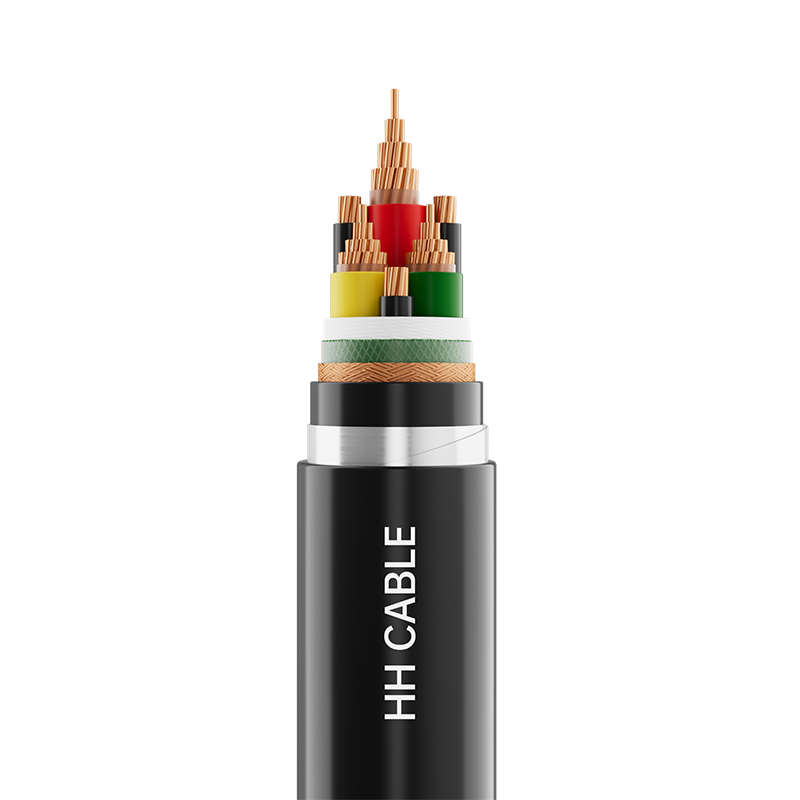
Medium-voltage distribution networks typically rely on a product built through this sequence, such as our 6/35 kV cross-linked polyethylene insulated power cable, which is produced on a dedicated CCV line with online eccentricity monitoring.
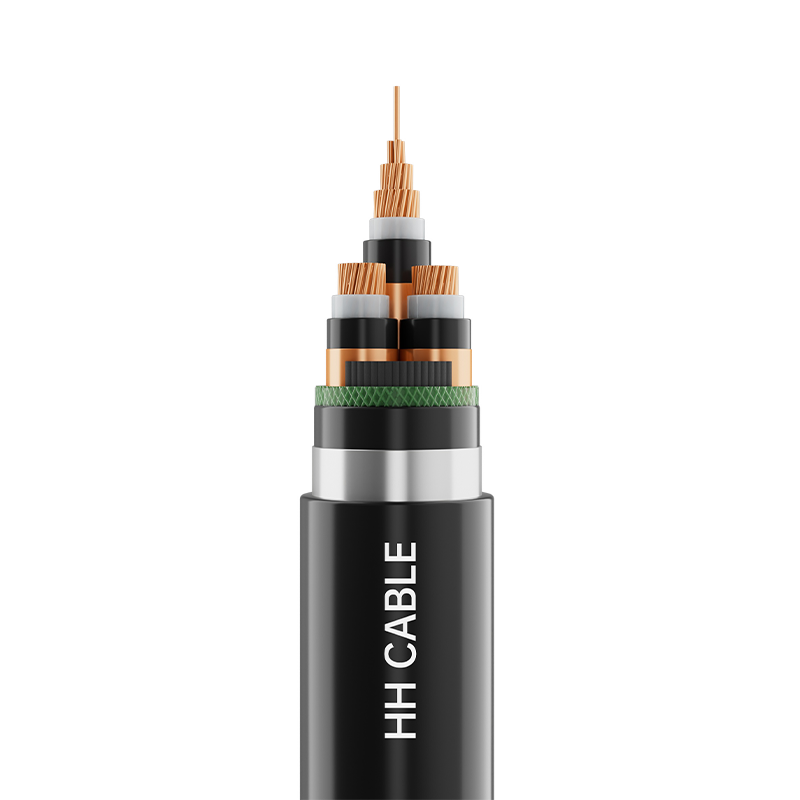 6-35kV Cross-Linked Polyethylene Insulated Power Cable Suppliers, Wholesale CompWuxi Henghui Cable Co., Ltd is China Suppliers of 6-35kV Cross-Linked Polyethylene Insulated Power Cable, Wholesale 6-35kV Cross-Linked P...View Product →
Where Manufacturing Quality Is Won or Lost
Four parameters are rarely visible on a datasheet but decide field performance:
- Insulation eccentricity. If the insulation layer is not concentric, the thin side becomes a weak point under voltage stress. Online gauges measure diameter and eccentricity continuously; buyers should ask whether the factory uses them.
- Curing conditions. XLPE requires precise cross-linking temperature and pressure. Incomplete curing raises dielectric losses, while moisture introduced during curing creates water trees that grow under voltage until breakdown.
- Partial discharge level. For 6 kV and above, partial discharge testing should be routine. At 35 kV, acceptance levels are typically around 5 pC or below at 1.5 times the operating voltage.
- Conductor purity and compaction. Impurities in copper or aluminum raise resistance and create hot spots. The same nominal cross-section from different suppliers can differ in real ampacity.
To frame the product range, Table 1 summarizes the typical structure buyers encounter across voltage classes.
Hidden Quality Indicators Inside the Factory
Test intensity should scale with voltage class. In our production flow, a relative comparison of test time and batch checks looks like this:
30
0.6/1 kV
60
6/35 kV
90
66/110 kV
The relative index reflects hours of conditioning, number of partial discharge samples, and withstand voltage levels per batch. Producers that skip this depth at medium voltage are the ones most likely to deliver a cable that performs well in a quick factory test but degrades early under load cycling.
How Power Cable Applications Distribute Across Industries
From typical project demand and utility purchasing patterns, power cable output divides roughly as follows:
- Electric grid transmission and distribution (40%)
- Industrial and mining installations (25%)
- Infrastructure construction (15%)
- New energy solar and storage (15%)
- Rail transit and tram power supply (5%)
Grid projects remain the largest buyer of medium- and high-voltage power cables, which is why passing utility supplier prequalification, such as the State Grid assessment, matters for manufacturers in this segment. Industrial and mining users purchase more control and power cables per project, usually in smaller batches with special mechanical or temperature requirements. The new energy segment is growing fastest because photovoltaic plants consume large quantities of DC cabling; energy storage and new energy cable applications are increasingly specified in the same tenders as conventional power cables. Our range includes solar photovoltaic cables to EN standards as well as IEC and TUV certified versions for different project geographies.
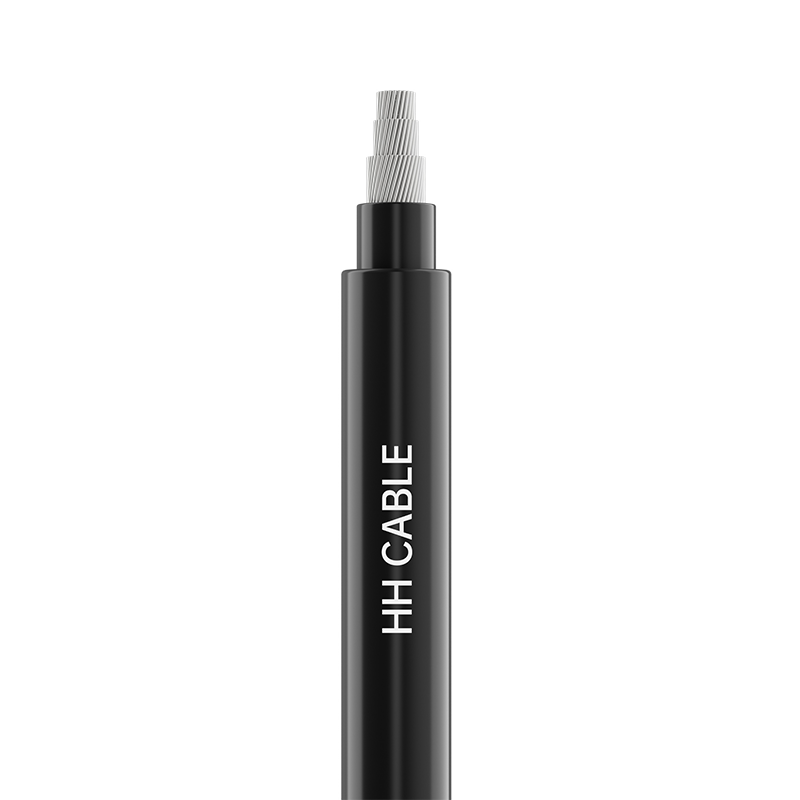 Solar Photovoltaic Cables (EN Standards) Suppliers, Wholesale Company - Wuxi HenWuxi Henghui Cable Co., Ltd is China Suppliers of Solar Photovoltaic Cables (EN Standards), Wholesale Solar Photovoltaic Cables (EN Stand...View Product →
For more on how these products behave in storage and renewable systems, see our analysis of energy storage and new energy cable applications. Rail transit is smaller but stable, with dedicated constructions such as 10 kV XLPE cables for tram power supply systems where mechanical toughness and partial discharge stability are checked with extra care.
How to Choose a Power Cable Manufacturer Without Hidden Risks
A structured evaluation covers five areas. Each one is simple to verify but often skipped under schedule pressure.
1. Define the duty
Confirm operating voltage, system grounding, installation route, ambient temperature, continuous load, and short-circuit rating before comparing offers.
2. Check certificates and approvals
Look for ISO 9001, ISO 14001, and ISO 45001 management systems, plus product-level compliance with IEC, GB, EN, or TUV standards and any utility prequalification status.
3. Audit production and test capability
Ask about online eccentricity gauges, dry-curing CCV lines, partial discharge test equipment, and batch traceability. Our factory runs a Swiss Melafil CCV 110 kV line with online Sikora gauges alongside cabling and stranding machines built for continuous duty.
4. Confirm customization and marking
Verify conductor material, armor type, sheath color, drum length, and printed markings so the delivered cable matches the route drawings and jointing accessories.
5. Agree on delivery and support
Set production lead time, sample retention, test report delivery, and after-sales response for installation questions before placing the order.
Industrial buyers should also match cable construction to the drive system. Variable frequency drives introduce harmonics and voltage reflections that stress standard cable insulation; a dedicated construction such as our 1 kV variable frequency power cable is designed with the symmetrical screening needed to control those stresses.
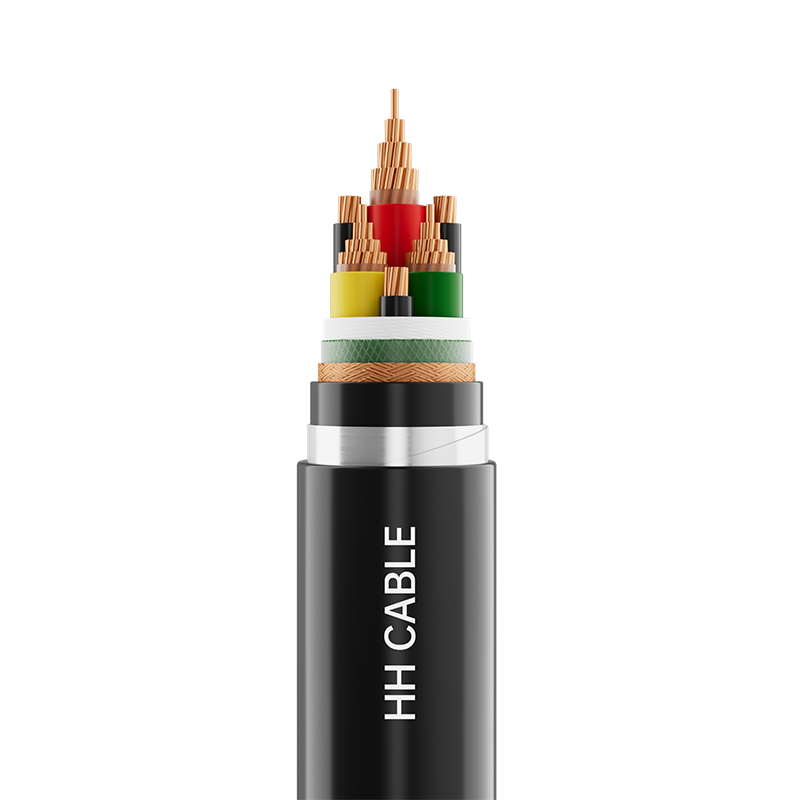 Rated Voltage 1kV Variable Frequency Power Cable Suppliers, Wholesale Company - Wuxi Henghui Cable Co., Ltd is China Suppliers of Rated Voltage 1kV Variable Frequency Power Cable, Wholesale Rated Voltage 1kV Variable ...View Product →
Installation, Maintenance, and Compliance After Delivery
- Respect bending radius. For armored medium-voltage cables, a typical minimum bending radius is about 15 times the outer diameter during installation. Pulling beyond this limit damages screens and insulation without visible evidence.
- Store drums correctly. Keep drums upright, protected from direct sunlight and standing water, and avoid long outdoor exposure that degrades the outer sheath.
- Use correct installation tension. Excessive pulling force or cable scraping against duct entries can shift the insulation screen and create a future fault location.
- Keep compliance records. Batch certificates, test reports, and jacket markings allow traceability to production records. Utility projects increasingly make this documentation part of acceptance conditions.
Standards and utility requirements change over time, so maintaining contact with your supplier's regulatory and industry updates helps you plan cable replacement, extensions, and new tenders with accurate specifications.
Power cable quality is decided on the production line, not at the tender table. Buyers who verify process control, audit factory testing, and demand complete documentation receive cables that perform for decades. At Wuxi Henghui Cable, we build power cables up to 110 kV, maintain test records for every batch, and welcome customers to inspect the equipment and processes described above before they commit.
PREV:AWG Cable Meaning: How the American Wire Gauge Standard Affects Your Cable Choice
NEXT:How Deep Should Electrical Conduit Be Buried? NEC Minimum Burial Depths
NEXT:How Deep Should Electrical Conduit Be Buried? NEC Minimum Burial Depths
Interested in cooperation or have questions?
Featured Products
Comprehensive Cable Solutions
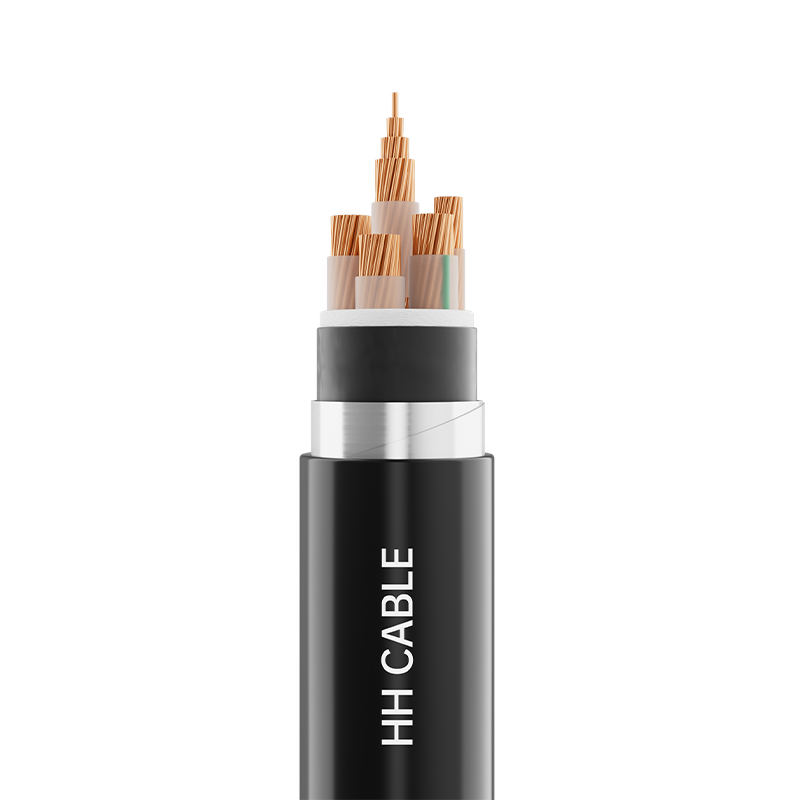


Ready To Customise
Your Cable Products?
Your Cable Products?

Customized Cable Solutions, Bulk Wire Supplier in China. Relying on genuine core quality to build a renowned brand, striving to become a benchmark for advanced
cable standards.
Product Categories
Quick Links
Contact Us
-
Email: [email protected]

-
Mobile: +86-0510-87296815

-
Fax: +86-0510-87295158

-
No. 1, Fengyi Jinfeng Road, Guanlin Town, Yixing City, Jiangsu Province, China

Copyright © Wuxi Henghui Cable Co., Ltd. All Rights Reserved. Custom Cable Manufacturers Electrical Cables Factory
